The AMAZON!!! (Part 5-- Waterfall Hike and Limpia)

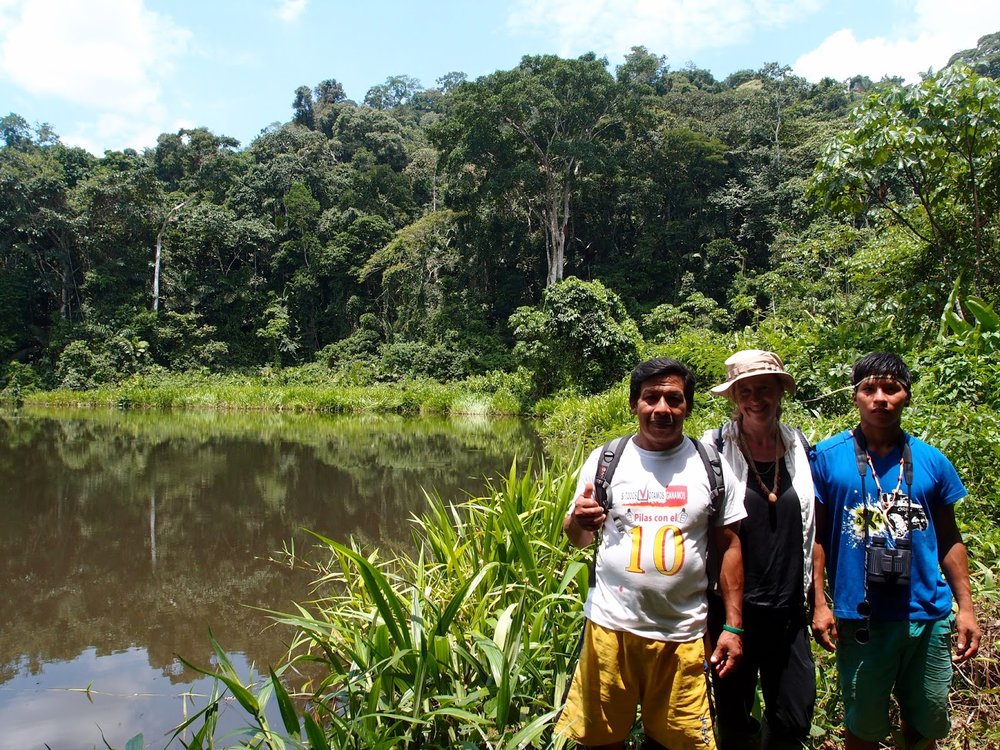
Pegonka and me at the magical waterfall

Hello again!

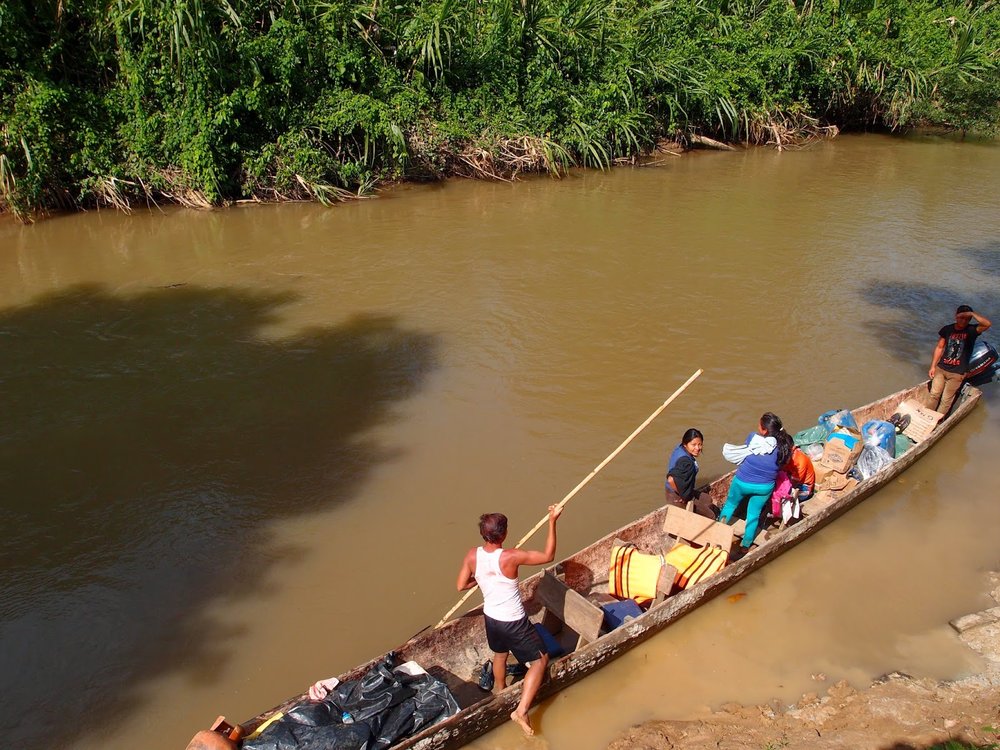
So, this post will wrap up the Ecuadorian Amazon portion of my trip! After spending a few days at the Huaorani Ecolodge, we packed up our stuff and headed downstream by dugout canoe on the Shiripuno River.  There we camped for a night before leaving the jungle.


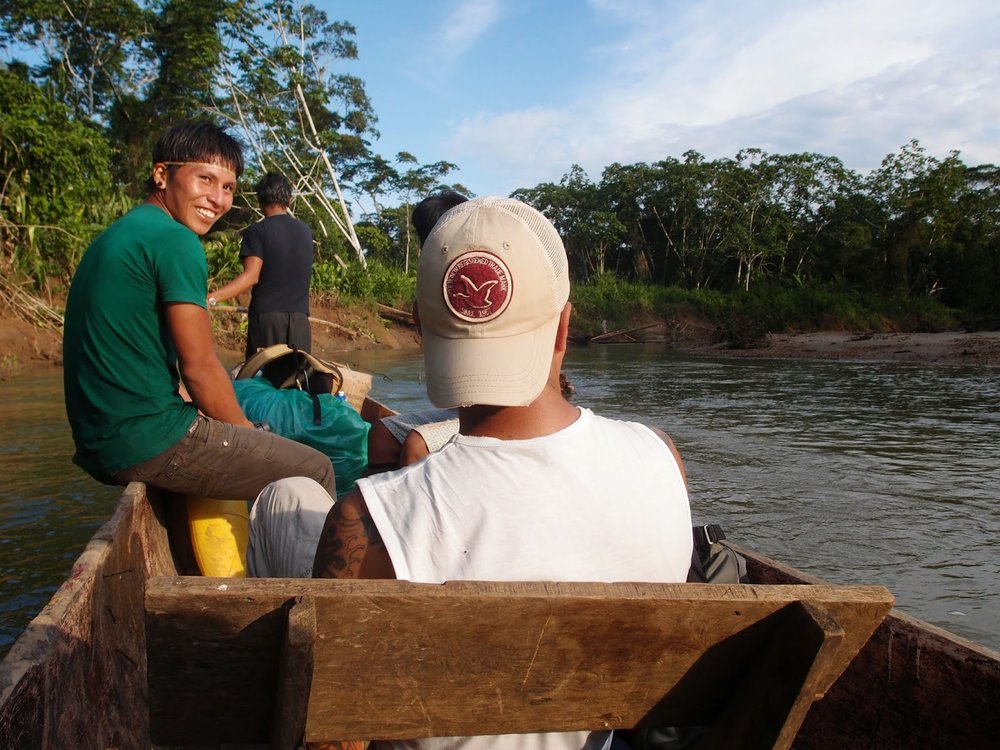
It was so peaceful floating down the river...


Our lodging situation was great-- tents to keep out the bugs, a nice platform and roof... and just down the hill were some showers and bathroom stalls... luxurious camping!

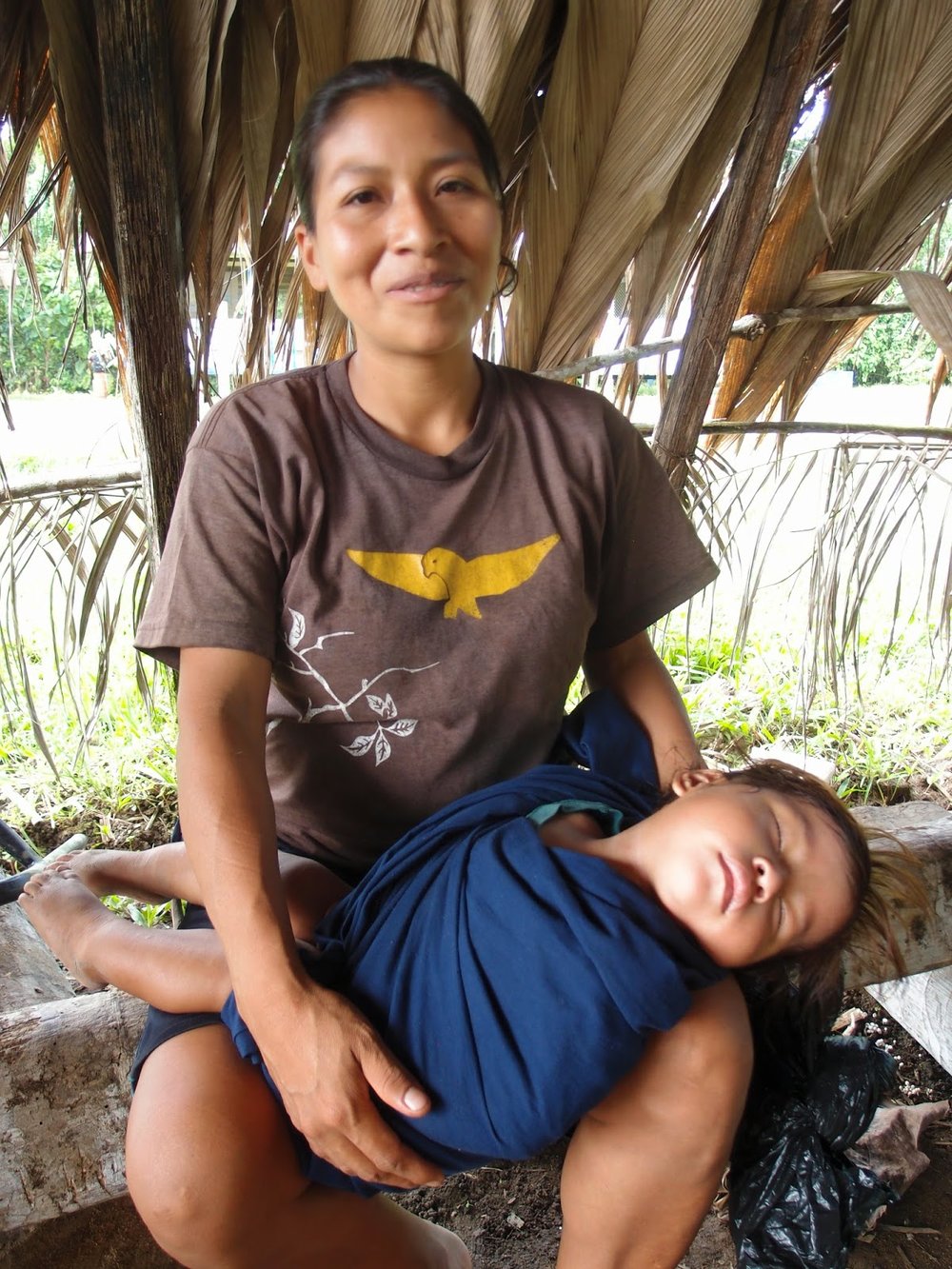
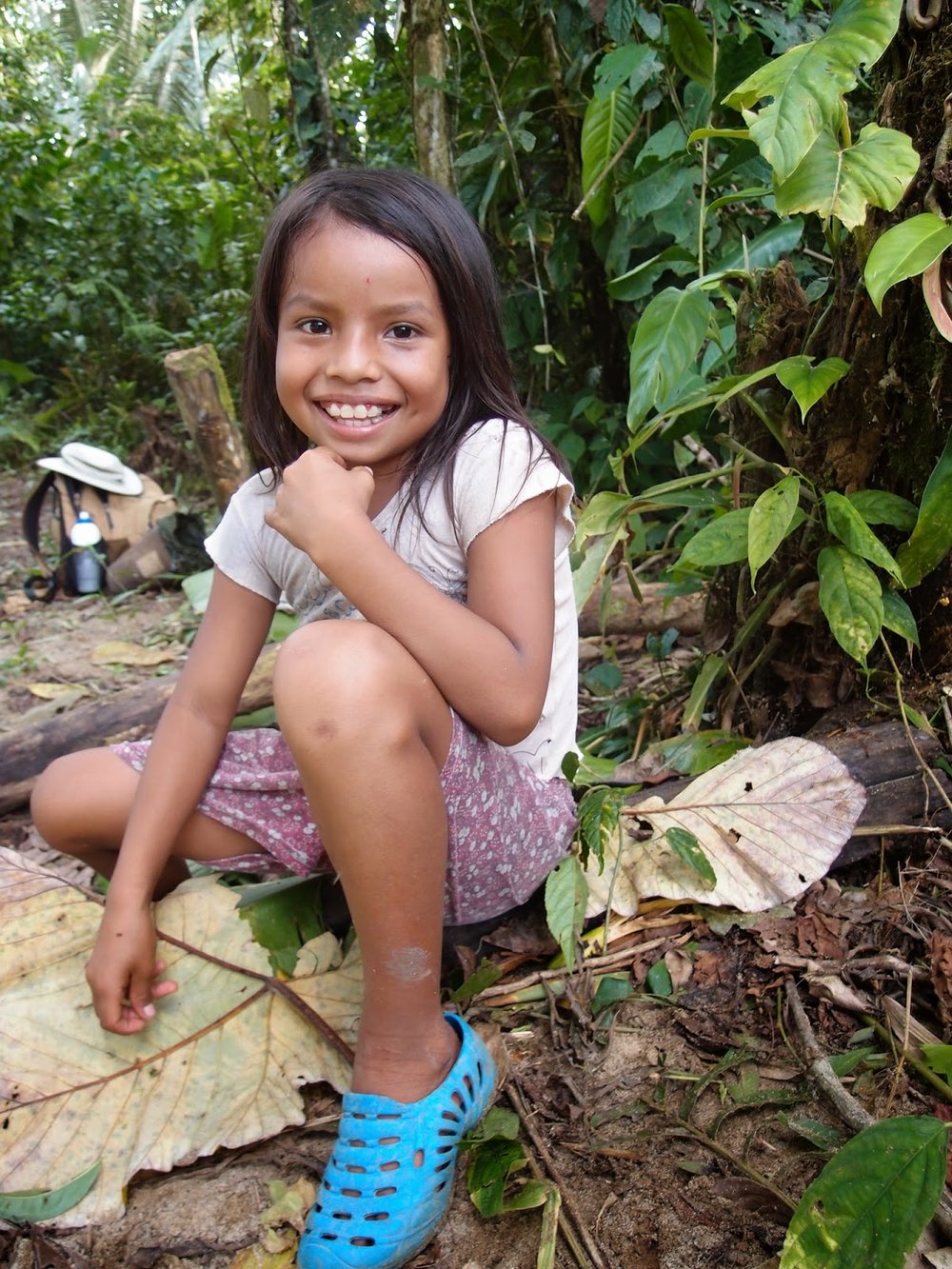
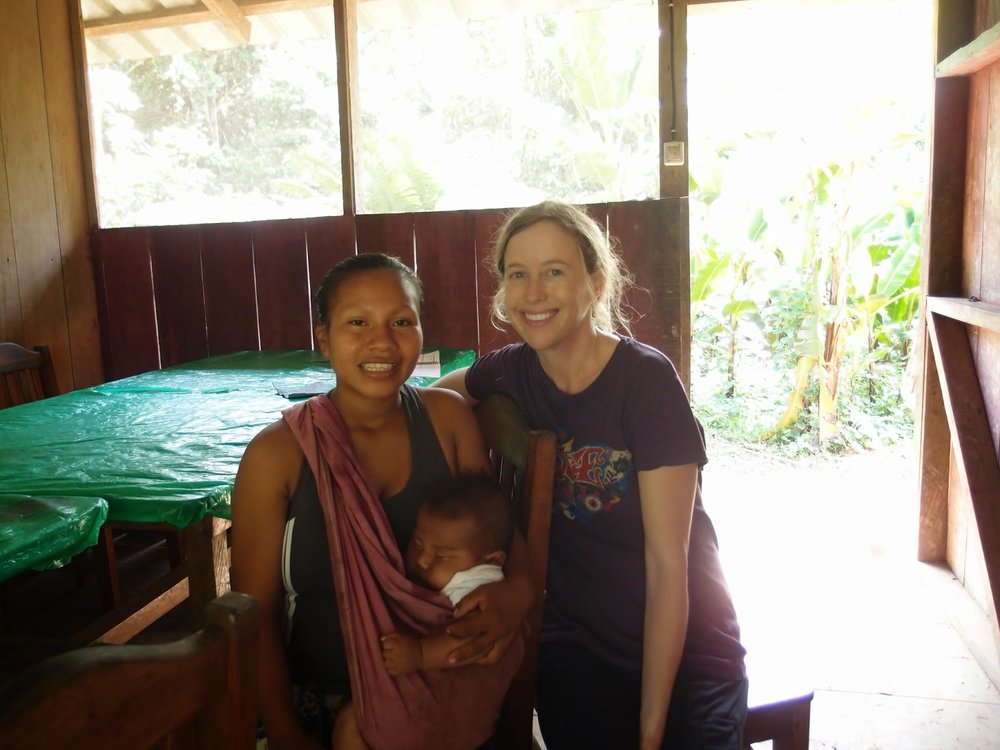
Here I am with Pegonka, my fantastic guide (with the yellow boots).  On the other side is cute little Fernanda and her mother, Inez, both of whom I really loved spending time with.


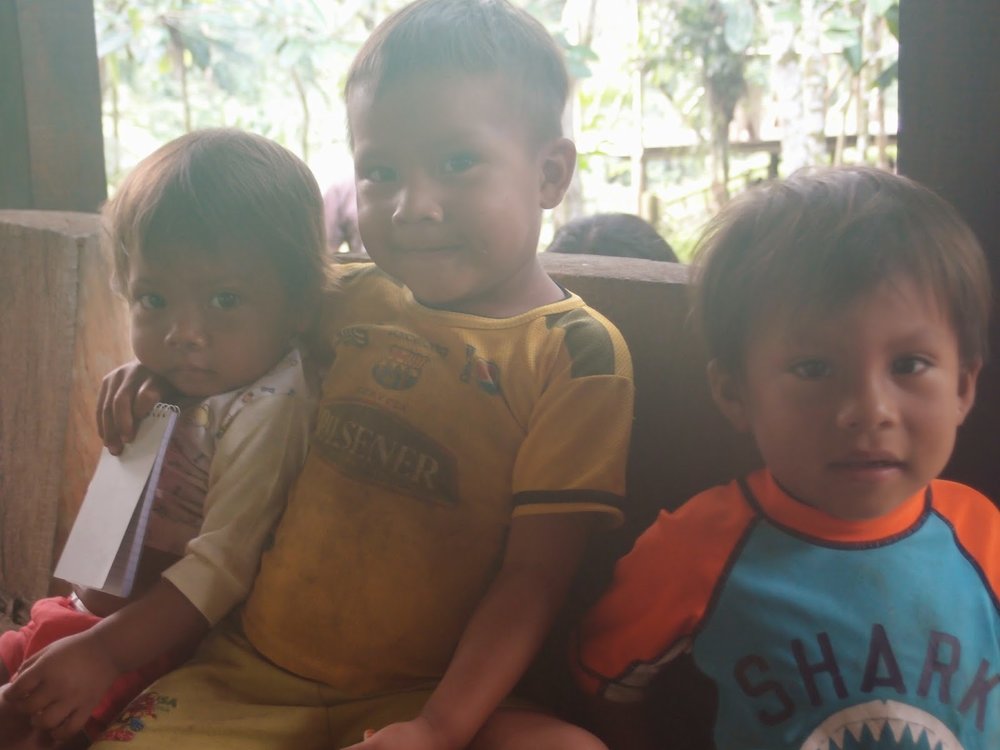
And here's Inez's youngest daughter, sweet little Vicky...
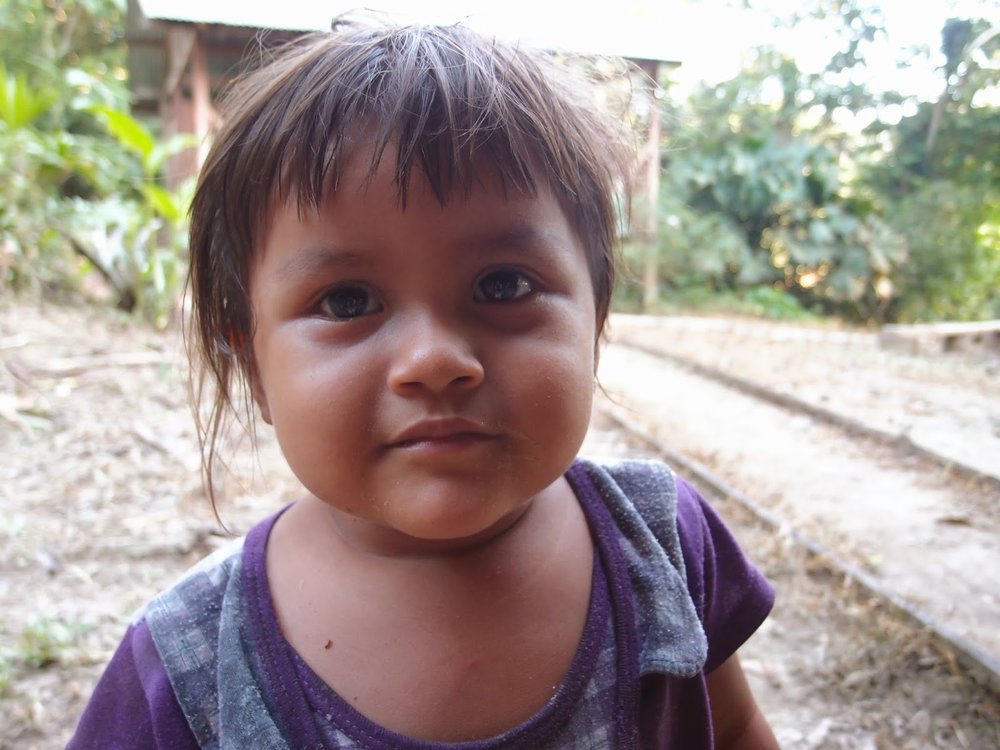


They taught me to weave bracelets with strands of palm...


I came home with lots of these beautiful bracelets, naturally colored with plant dyes from the jungle.  Here I'm showing off one on my wrist that Inez made for me...

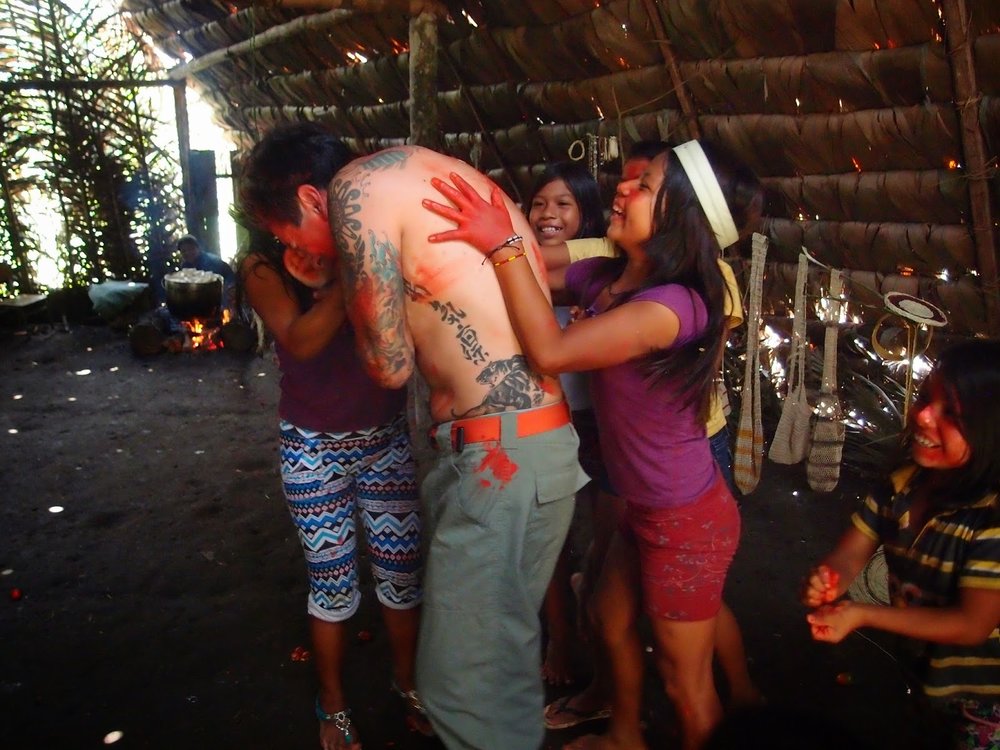
*I still have achiote on my face from earlier that day... it's just smeared with sweat at this point!*

This is Inez's daughter with her adorable baby...


From the campsite, we took a gorgeous hike to a waterfall, along a ridge and down a steep canyon into a magical valley.

Pegonka plucked a plant on the way that we all used later as a natural shampoo in the pool beneath the waterfall. When you broke open the stalk, there was a gooey, foamy substance inside that lathered up nicely...


We stopped to relax in a natural vine hammock along the way.  Pegonka talked about how when he was a kid, he and his friends would swing on vines like this across the valley...

As he told me about his childhood shooting blowguns and climbing trees and swinging on vines, I kept thinking about Lil Dude and his 7-year-old classmates sitting all day at desks and staring at worksheets and whiteboards except for a few brief outdoor recesses... and honestly, it made me kind of sad.  I've observed that his natural inclination as a 7-year-old boy is to swing, run, climb, throw stuff, and pretend to shoot stuff.  Of course, I think education of children is important... I just wish that our education model involved more active interaction with the natural world.

Pegonka didn't start school until he was a young teen, so his childhood was blissfully free...  (Waorani kids nowadays in his community do start school at a younger age-- and then after school they swing and climb and shoot in the jungle.)
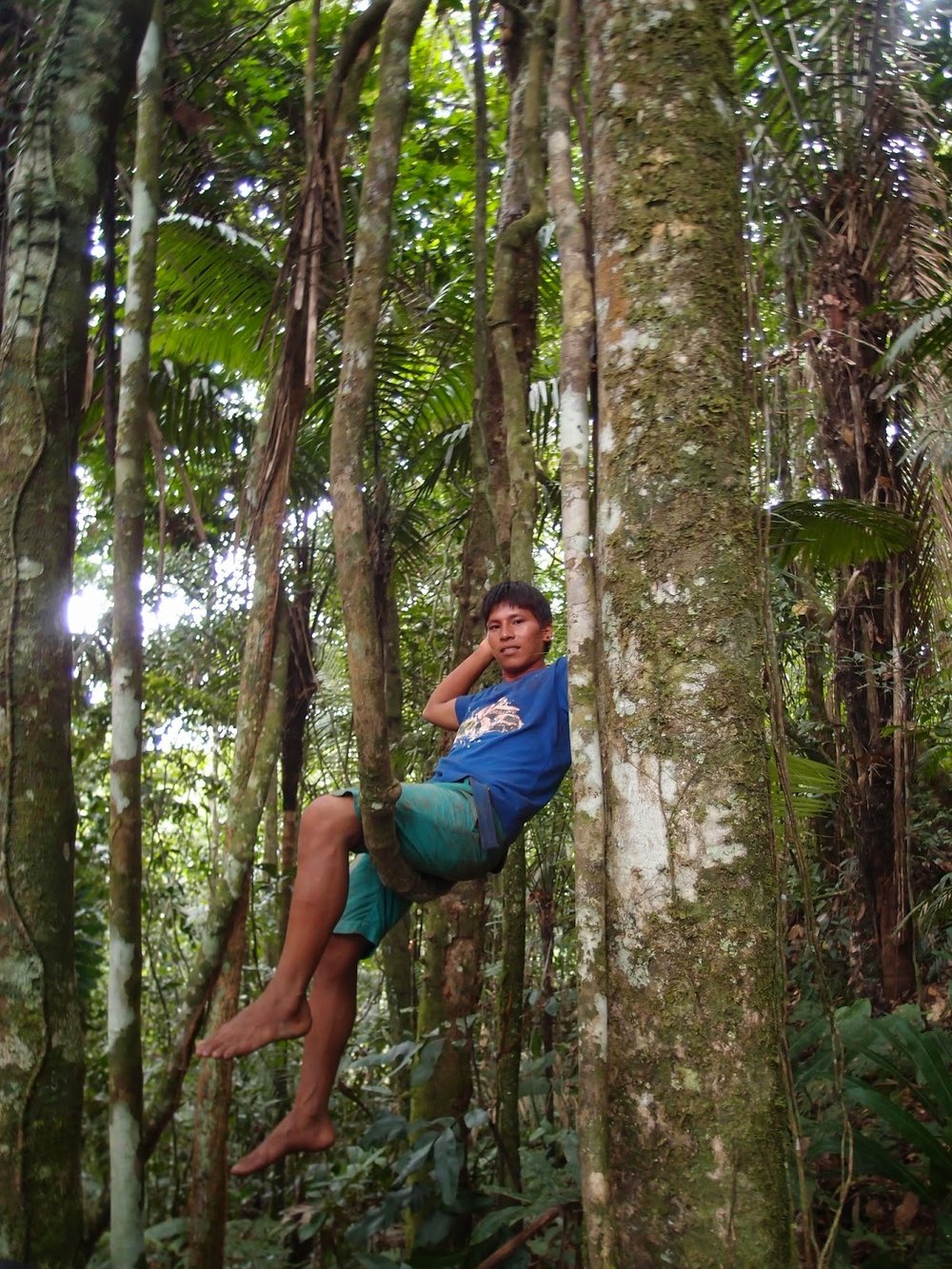

So relaxing....


With amazingly keen eyes, Pegonka spotted some fruit in the treetops and climbed up several stories to retrieve it.  He tossed it down to us, far below.
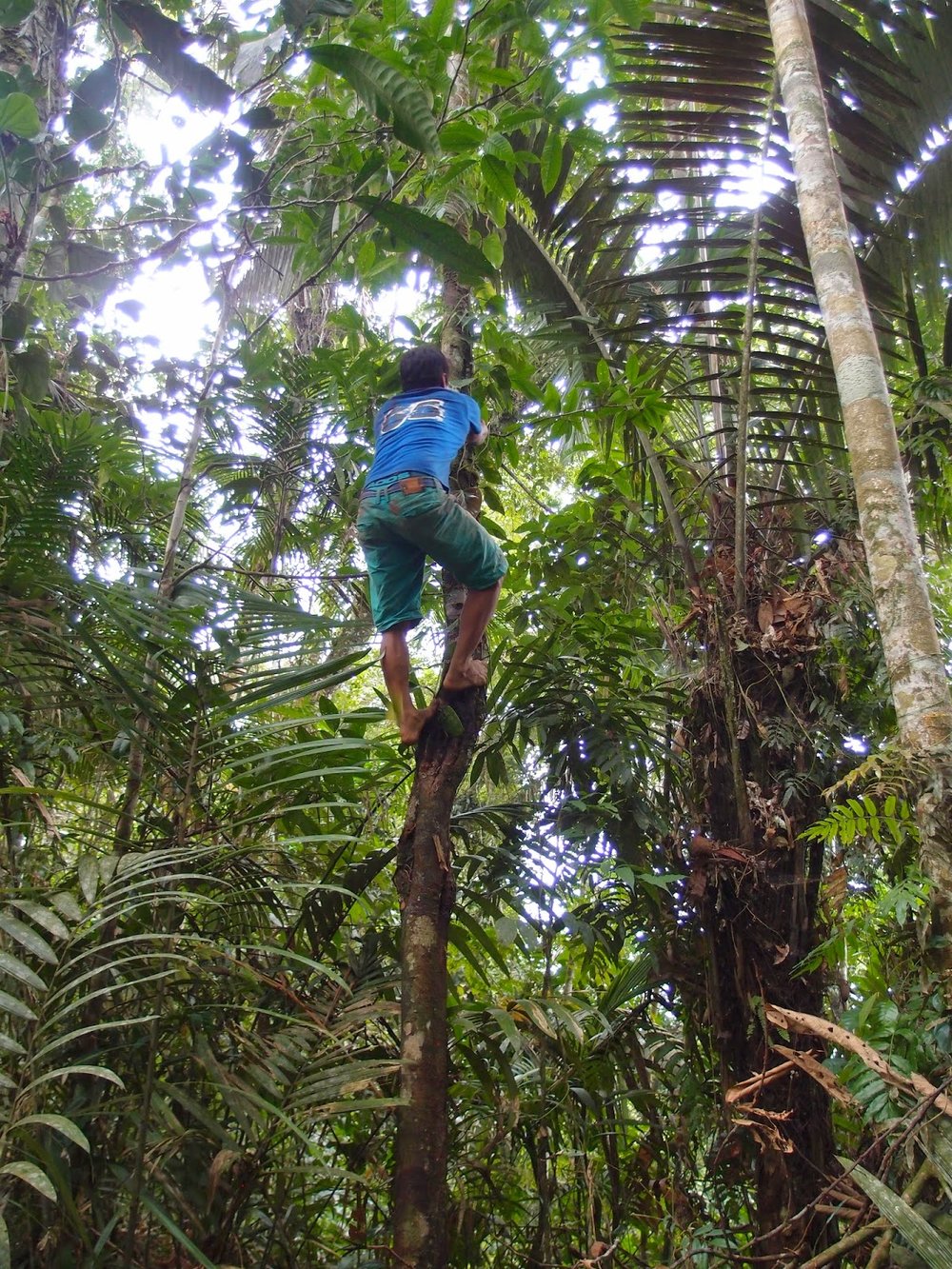

In the first post I did, I showed pics of him climbing using a woven ring of vines to help him climb... but he only needs that when he's climbing while carrying his blowgun and spear.  With his hands totally free, he doesn't need any extra help.  He said that by the time kids are 7 or 8, they've mastered the skill of climbing trees that are over a hundred feet high.  (My Lil Dude would definitely prefer mastery of tall-tree-climbing over mastery of double-digit-addition any day.)


I have no idea what the name of this fruit is in English... or even if an English name exists for it... but it had large seeds with very tart flesh around them that you sucked on.


We descended this steep staircase into the valley.  Pegonka said that before they built the stairs (for tourists like me, mainly), you had to use ropes or vines to get to the bottom.


And behold!  A magical piece of paradise awaited us!
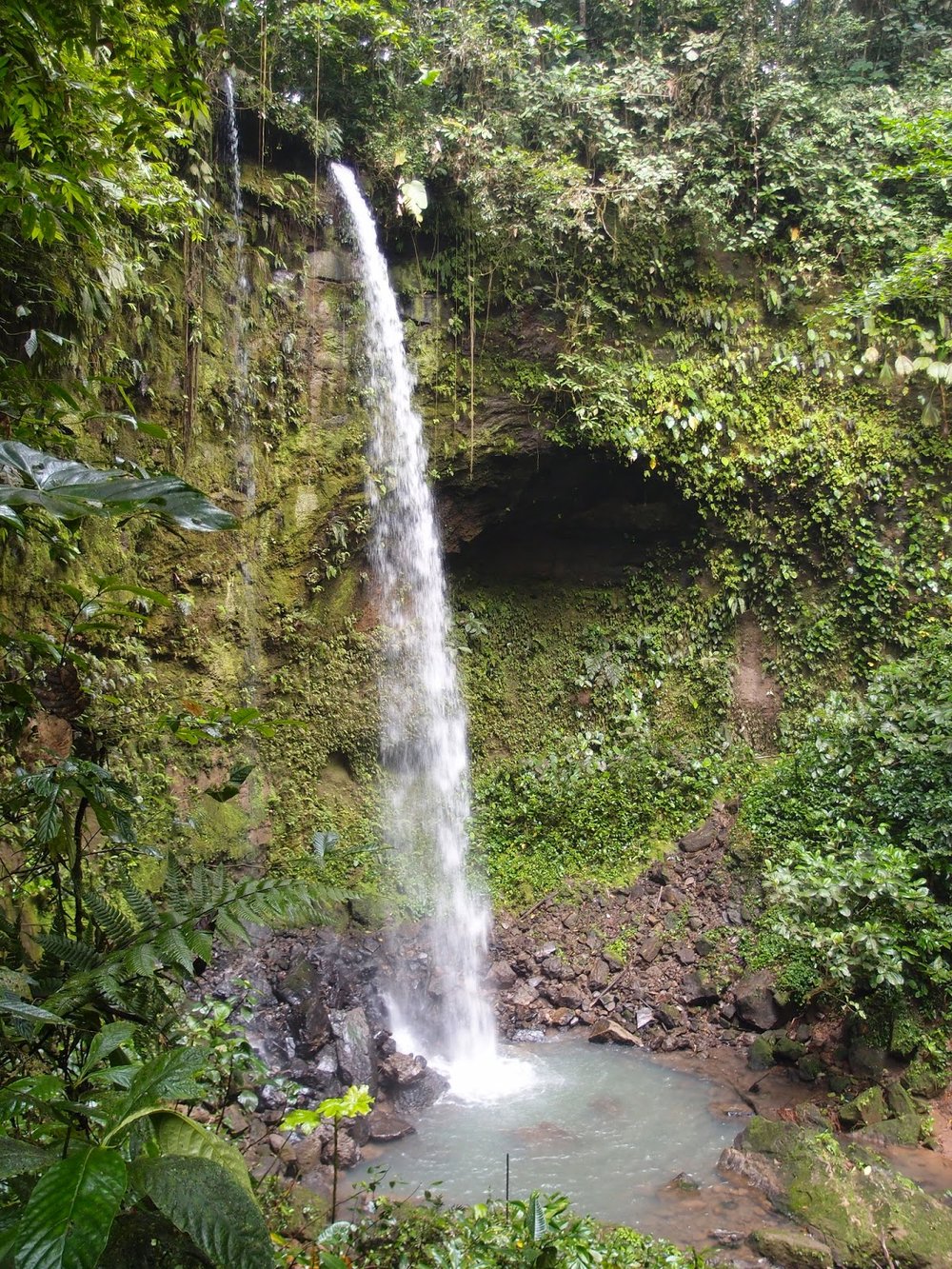

After Pegonka did a quick caiman check with a stick (no caimans that he could find), we entered the water-- me, Pegonka, and Javier (the other awesome guide).  At first I was a little squeamish about where I stepped, worried it could be straight into the jaws of an annoyed caiman, but soon I forgot about that...

Pegonka and Javier showed me how to do a limpia-- a spiritual cleaning-- beneath the cascade.  It felt amazing-- so intense with the pounding water and mist.  The whole time, the sunlight was sparkling and bright blue morphos were fluttering around... and by the end of it, yes, my spirit felt gleaming new. :-)  

Pegonka told me that people-- especially shamans-- get power from waterfalls.  I asked him about other things considered sacred and powerful in his culture, his answer was jaguars (which had already come up in earlier conversations, in fact.)  When people die, their spirits become jaguars or other wild cats, and sometimes after a loved one dies, you might spot them in their feline form.

Afterward, we ascended the staircase, our spirits clean and soaring....


The last day, we headed downstream toward a road at the jungle's edge, where we would be picked up by a driver in an SUV.  I savored my last hours in the forest...

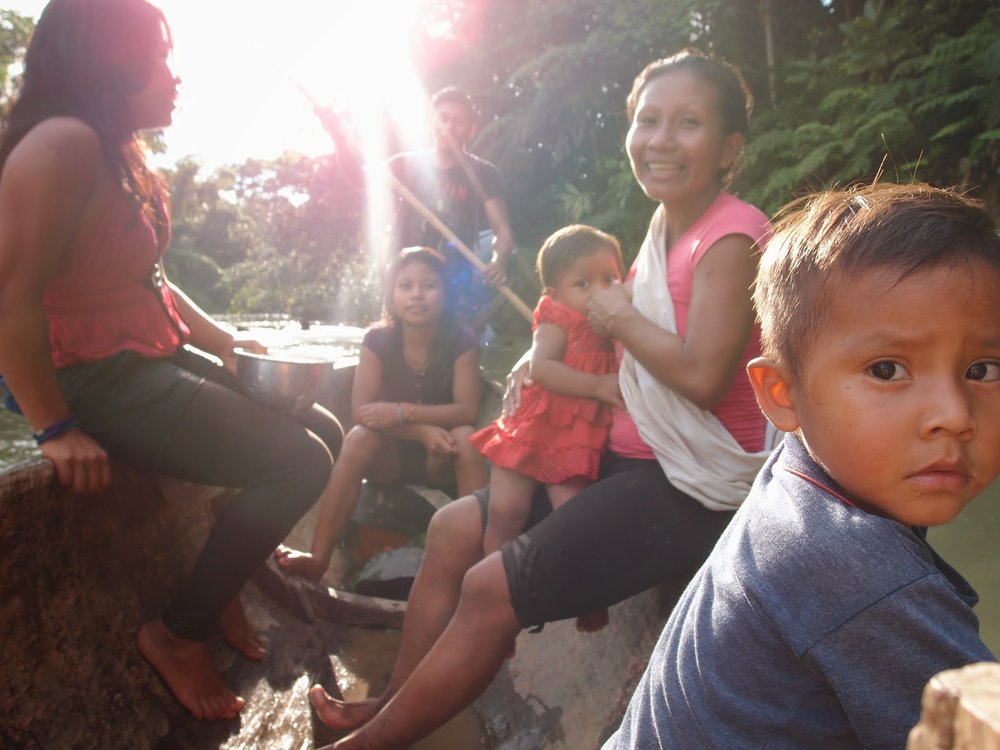
Here's Pedro, shielding his wife, Elizabeth, and their baby from the sun with a palm leaf in the canoe...


I sat next to Inez for these last hours in the canoe, and we had fascinating conversation about the past few decades of Waorani history in this territory.  I won't get into all the nitty gritty details here (you can read the book ironically titled SAVAGES if you're interested), but suffice to say that the various cultural groups in this area have a gory history of spearing each other on sight.  In the past several decades, a tentative peace has been reached, and there has been some intermarriage.  Inez has a Quichua husband, for example.  (Note that culturally, the Amazonian Quichua are very different from the Andean Quichua in my book THE QUEEN OF WATER.)

She told me that when she was a little girl, she went to school for just a couple years.  She had to swim in the river for an hour to get there, while holding her notebook over her head with one hand to keep it dry.  If it got wet, the teacher would hit her.  In third grade, she quit school because it was too hard to keep that darn notebook dry and she was sick of the teacher hitting her.


It was sad to leave the rain forest... I felt like we were leaving a piece of heaven.  Maybe I would've felt differently if it had been really rainy (it was sunny nearly the whole time-- this was in late Feb, just before the beginning of rainy season)... or if the bugs had bugged me (but that permithrin spray Ian put on my clothes back in Colorado made all bugs stay away from me.)  The whole trip felt so comfortable and natural... and I want to go back!!!

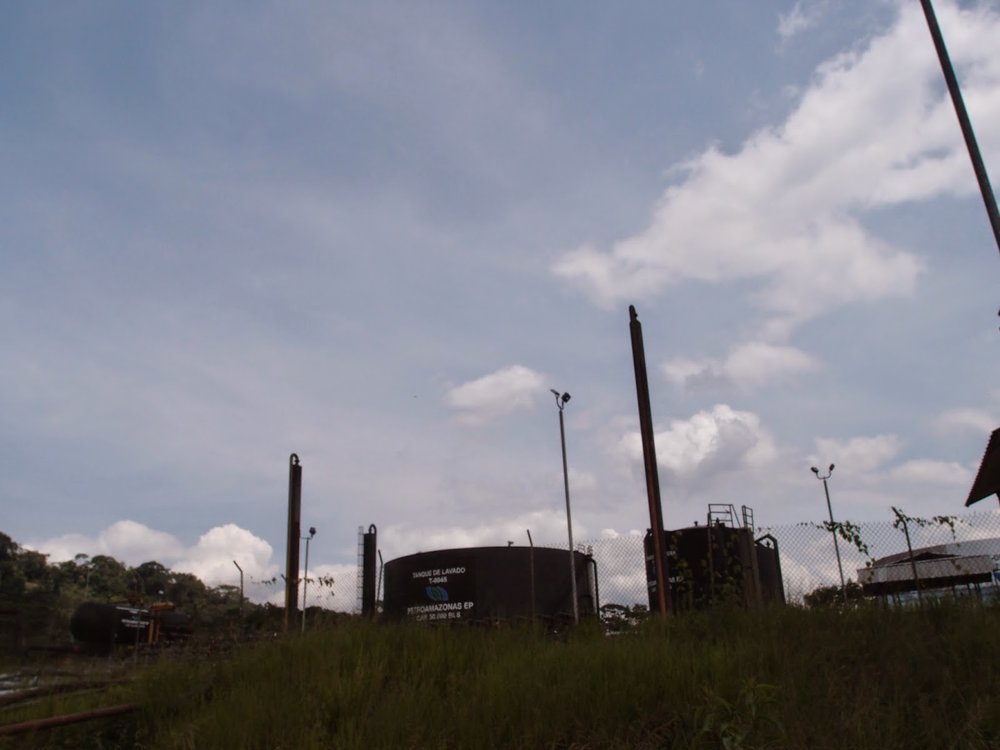
It was devastating to see the oil drilling operations at the edge of the jungle.  The documentary CRUDE shows all the horrible cultural and environmental and health consequences of these operations.  And unfortunately, President Correa has recently sold oil drilling rights in an enormous tract of territory also in the Yasuni National Park.  Heart-breaking, but it's prompted me do my own little part to try to support the indigenous groups in their effort to protect their land. 

If you missed my other posts about my trip to the Amazon, you can read Part 1 here, Part 2 here, Part 3 here, Part 4 here.  And stay tuned for one more Ecuador post, this next one in the Andes, with my friend and co-author Maria Virginia Farinango in her home town of Otavalo. Thanks for coming by!

xo,
Laura

The AMAZON!!! (Part 4-- The Journey There)


Hi once again,

So I thought I'd tell you about my journey to the Ecuadorian Amazon!

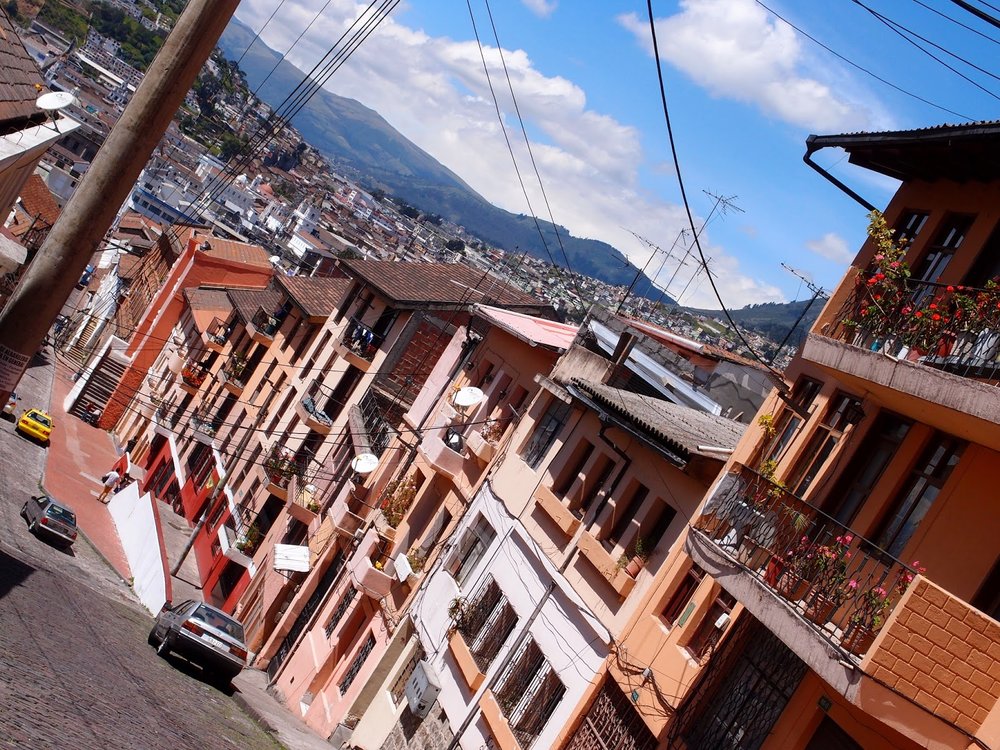
First stop off the plane from Denver to Quito was this lovely hotel, Casa Gardenia, in the historic part of town just a few blocks from the main plaza.  It was in a renovated old building and had a stylish, modern feel.


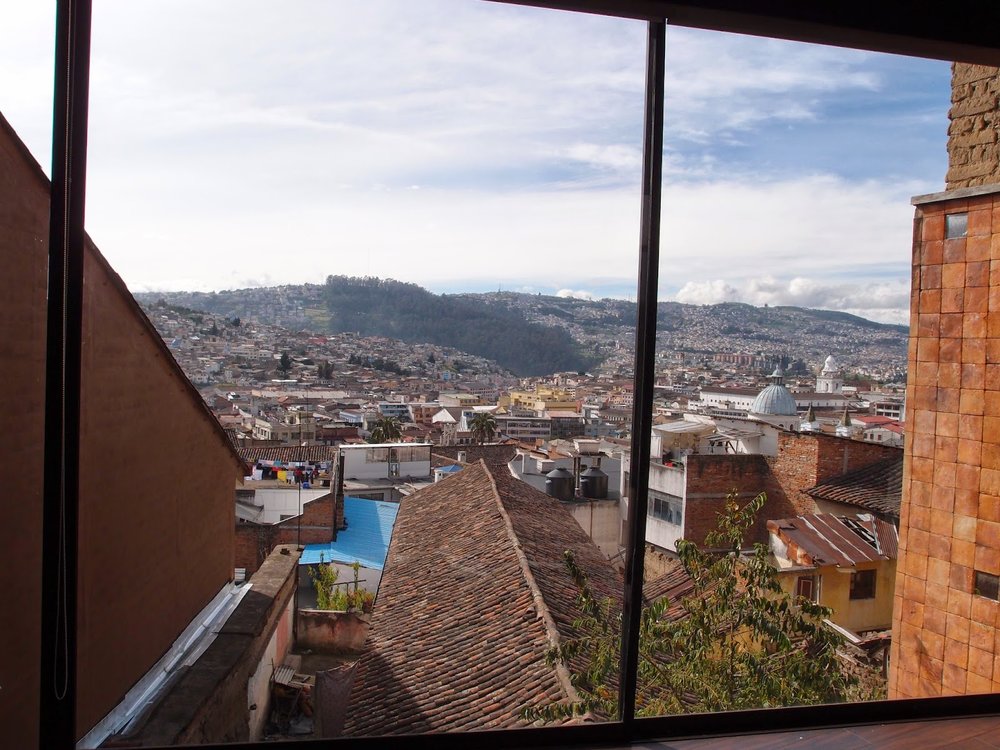
I had to do page proofs for The Lightning Queen over my trip, and had only a small window of time to do them-- basically the plane ride there and my "free day" in Quito, before heading to the jungle.  So I found this comfy spot on the third floor lobby and worked and enjoyed the view.  I took breaks here and there to get some tea from the second floor or walk down to the plaza and get food.  It was delightful!


Plaza de la Independencia-- a really nice atmosphere, with flowering trees and palms and people strolling about...


I did pop in and take a little tour of the main church on the plaza-- felt I should do at least one little touristy thing in Quito.


It was wonderful to be away from the cold and snow in Colorado-- this was late February, so I welcomed the warmth and greenery.


The next morning, an SUV picked me up from the hotel, and I got to know my tour guide, Javier, who was great.  We picked up the only other member of the tour group (it was tiny!)  and headed toward the "Oriente"-- the Eastern part of Ecuador, toward the edge of the jungle.  Gorgeous green-skirted Andean mountains...


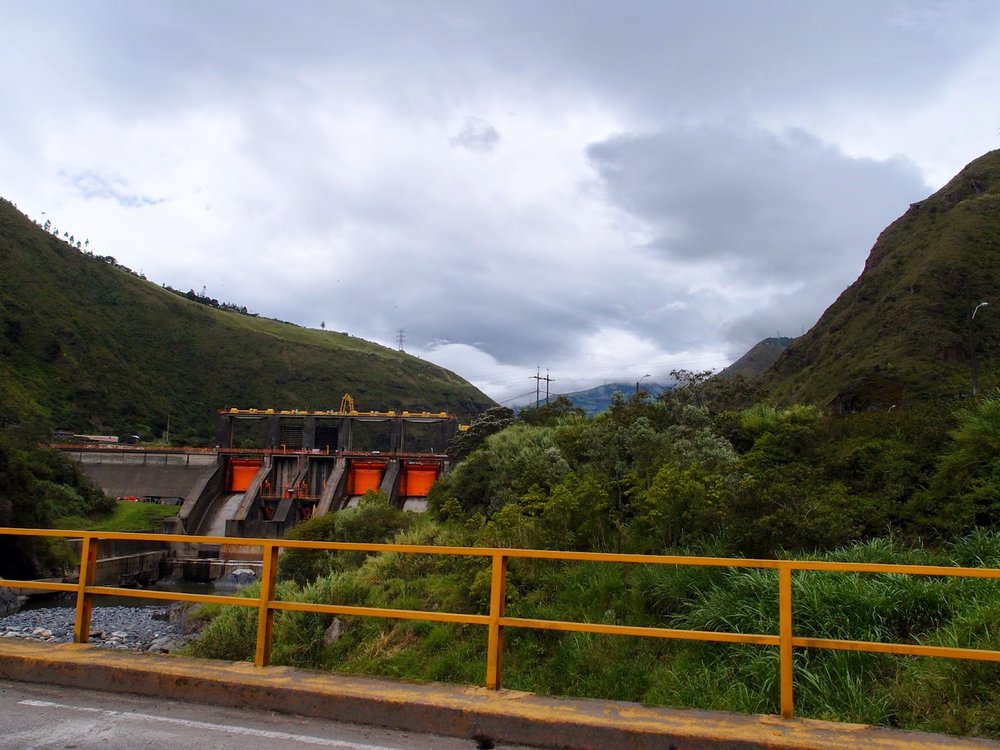
After a few hours, we made it to Banos (there should be a ~ over the n, but I can't figure out how to do it in Blogger).  This was a lovely little town at the jungle's edge, where we had lunch.  You can see a hydroelectric dam here-- sadly, these kinds of dams have had negative effects on the environment and cultures in the rain forest...


As we drove into the outskirts of the Amazon, along deep canyons, there were giant walls of green on both sides-- stunning.

I had a major bout of grumpiness when our plane was delayed over 24 hours because of the Carnaval holiday spontaneously shutting down most of the airport operations.... There was a LOT of waiting at this tiny airport, having no idea if and when our plane would ever take off...  I'd spent SO much time and effort planning this Amazon adventure, I was feeling devastated at the thought of cutting any more days out of it.


 But then, at this little one-room airport, I started talking with a friendly woman named Sue Brown, who is the Ecuador education director for Vibrant Villages, an awesome foundation that focuses on education, arts, nutrition, health, agriculture, economic development... and guess what?  She's a big fan of The Queen of Water!  She's actually shared Maria's and my book with people she works with.  It was so cool to meet this incredible lady-- she turned my grumpy day around fast....


This airport (in the town of Shell, named after the oil company) was.... rustic.

Here's the luggage area...


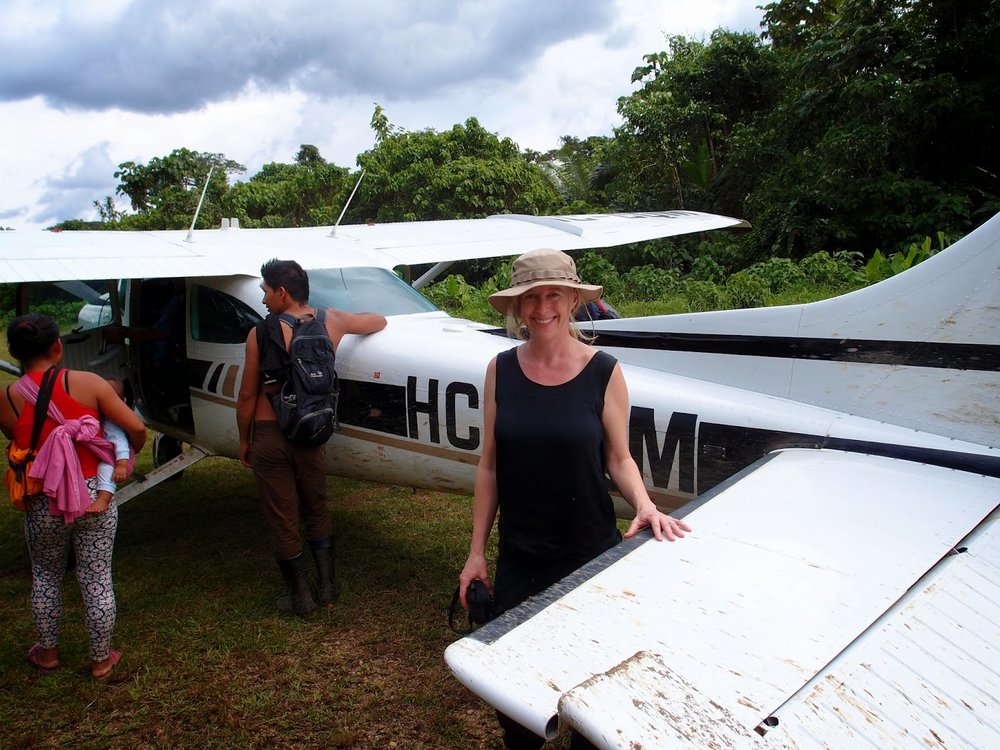
Our plane was a four-seater-- I sat next to the pilot up front,  Our guide, Javier, sat next to the other member of the tour group.


It was weird to have such an up-close view of the pilot using the panel of controls... I tried to pay attention to what he was doing in case, you know, something happened and I had to land the plane.... ha!


Once we were up in the air, all worries and grumpiness dissolved.... and I was able to feel, to my bones, the miracle that I was experiencing.  I was flying over the Amazon!!!  I felt enormously fortunate.


Looks like broccoli! :-)


The ride lasted about 45 minutes.  Here we're approaching the Huaorani Ecolodge, on the Shiripuno river...


We were greeted by the Waorani community, which felt wonderful.  And our Wao guide, Pegonka, introduced himself.


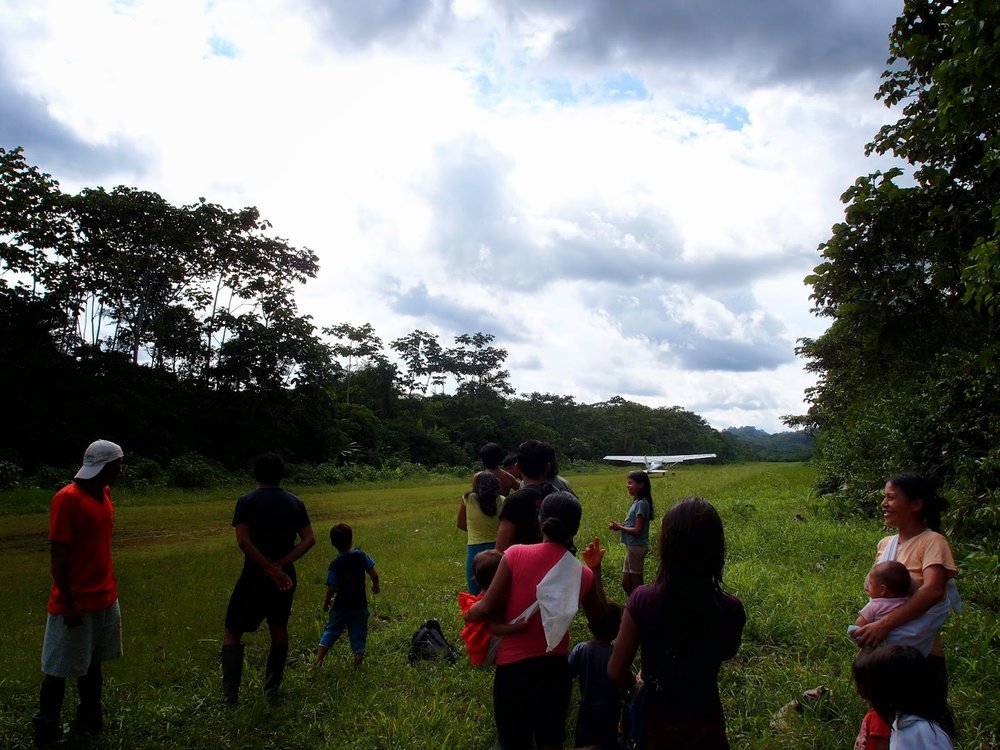
Here we are, watching the plane take off down the grass airstrip...  I was completely elated at this point.... felt like I was still flying!  I was aware, every moment, of the miracle of this adventure.
 

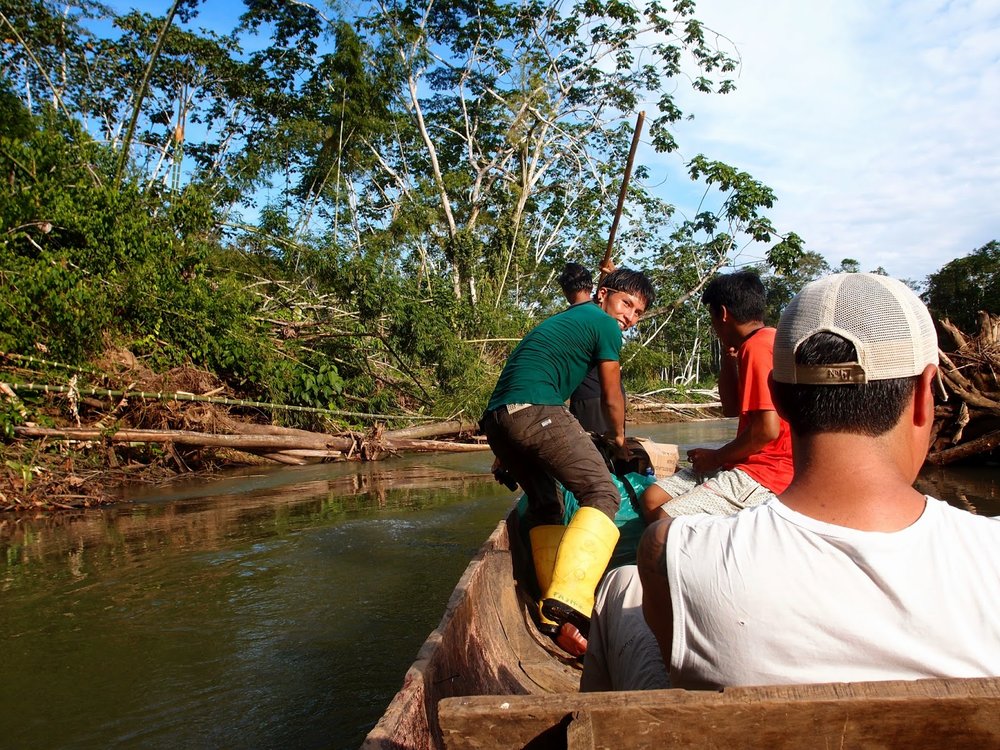
Then there was a dugout canoe ride to the lodge, so peaceful and beautiful...


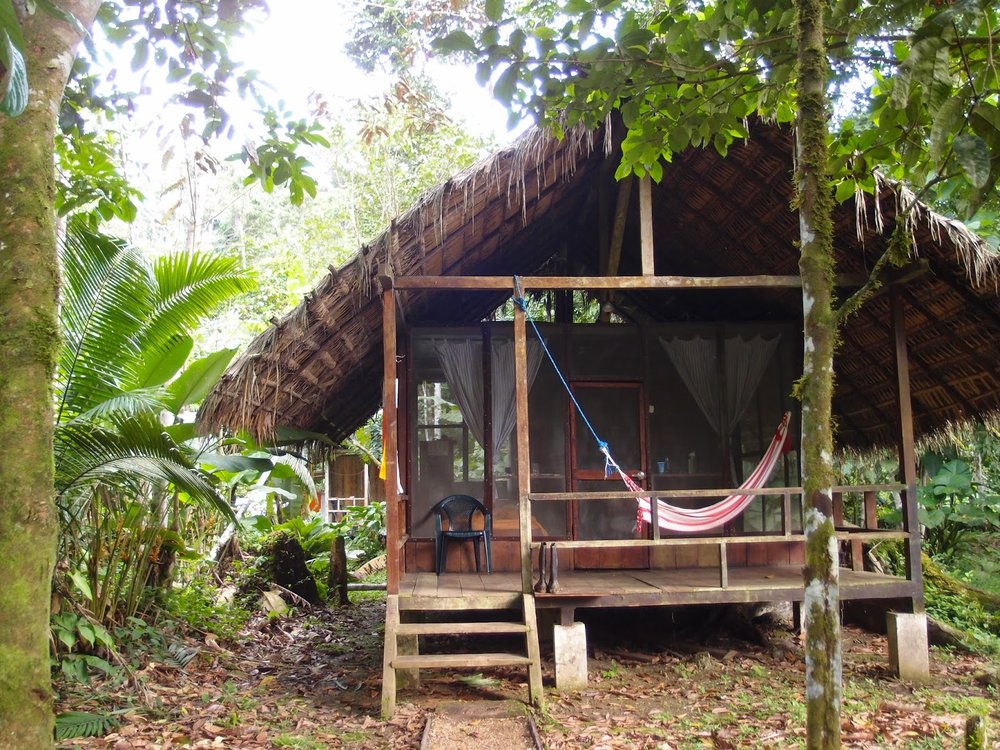
I was charmed by my little cabin, with screen walls so I could see the jungle around me.  Nights and mornings sounded incredible, with the symphony of frogs and insects.


Here's the view from my bed.  Just beyond those trees is the river.  Paradise, truly.


Thanks so much for coming by!  I still have one more Amazon post I'm planning on doing (about my hike to a breath-taking waterfall and the limpia (spiritual cleaning) I did there.  And if you haven't read my first three posts, you can do so here, here, and here!

xo,
Laura

Water

 
Reviews for The Queen of Water

* A poignant coming-of-age novel. -- School Library Journal, STARRED
*A singular, authentic voice." -- Publishers Weekly, STARRED
* "A moving, lyrical novel that will particularly resonate with teens caught between cultures." -- Booklist, STARRED
* "[A] riveting tale... by turns heartbreaking, infuriating, and ultimately inspiring. " -- Kirkus, STARRED
"A richly described coming-of-age story... by turns shocking and funny." -- VOYA


Links to Full Reviews

Awards and Honors

Oprah's 2012 Kids' Reading List for ages 12 to 14

Américas Award Honorable mention

Skipping Stones Honor Award for Multi-cultural/International Literature

Bank Street Best Books, *Outstanding Merit* for ages 12-14

Current 2012 Colorado Book Award Finalist

A School Library Journal Best Book of 2011

TAYSHAS list (Texas student reading list) 2012-2013

ALA Best Fiction for Young Adults 2012

A Junior Library Guild Selection

An Amelia Bloomer Project Recommended Book (feminist literature, ALA-affiliated)


*Read more about The Queen of Water here.*

THE LIGHTNING QUEEN Cover Reveal!

Hello, dear readers,

I'm so happy to show you the cover of my next novel, coming on October 27, 2015!


The exquisite cover illustration is by Greg Ruth. Gorgeous jacket design by Elizabeth B. Parisi of Scholastic.

I love the swirling movement in the art-- there's a lot of swirling imagery in the book, and Greg captured it so beautifully.  I also love the ethereal quality, so airy and infused with light.  And I love how the colors near the girl's head are warm and golden, and then the palette moves down to cooler, moodier grays and greens, and then, once again, is grounded in golden light.

The girl pictured is Esma, who calls herself The Queen of Lightning, and the boy in the field of on her skirt is Teo, who narrates most of the book (the parts set in the mid-20th century).  The contemporary parts of the book are narrated by his grandson, Mateo.  Like my book What the Moon Saw, this one also spans generations.

(In case you're wondering whatever happened to The Impossible Caravan, this is that book!  The title changed to The Lightning Queen, but the name of the caravan in the story continues to be The Impossible Caravan.)

Here's a summary of the book:

     Nothing exciting happens on the Hill of Dust, in the remote mountains of Mexico. There’s no electricity, no plumbing, no cars, just day after day of pasturing goats. And now, without his sister and mother, eleven-year-old Teo’s life feels even more barren. Then one day, the mysterious young Esma, who calls herself the Gypsy Queen of Lightning, rolls into town like a rush of color. Against all odds, her caravan’s Mistress of Destiny predicts that Teo and Esma will be longtime friends.
     Suddenly, life brims with possibility.
     And magic.
     And danger.
     With the help of a rescued duck, a three-legged skunk, a blind goat, and other unexpected friends, Teo and Esma must overcome obstacles—even death—to make their impossible fortune come true. Their destiny will span generations and ultimately depend on Teo’s American grandson, Mateo, to be fulfilled.
     Inspired by true stories from rural Mexico, this astonishing novel illuminates two fascinating but marginalized cultures―the Rom and the Mixteco Indians. Award-winning author Laura Resau tells the exhilarating story of an unlikely friendship that begins in the 1950s and reaches into today.

Ages 8 & up * Scholastic Press * 
available as hard cover, e-book, and audiobook* October 27, 2015 release

You can pre-order it now!


I encourage you to check in with your local indie bookseller about pre-ordering, too!

My brilliant editor with a big heart, Andrea Davis Pinkney of Scholastic

Here's a bit of background on the book, excerpted from my Author's Note in the back:

     I felt fortunate to form meaningful friendships with Mixteco people when I took a teaching position in the remote mountains of Oaxaca, Mexico. For two years, I was welcomed into Mixteco communities, first as a teacher and later as an anthropologist studying their culture. During this time, I heard stories about the beloved gitanos, whose caravans had shown movies in this region years earlier. I knew that gitanos (also known as Rom or Gypsies) have been misunderstood throughout the world, so I was intrigued by how fondly local people spoke of them. Like the Rom, the Mixteco have also faced prejudice and racist treatment for centuries. I felt drawn to explore the fascinating relationship between these two cultures.
     
     As I developed this story, I wove in realistic and mystical elements of oral histories I heard in Mixteco villages. The initial spark for this book came from the experiences of a ninety-six-year-old healer named María López Martinez (lovingly nicknamed María Chiquita—María the Little One). When she was a young girl, a gitana fortune-teller told her she would live a very long life. Shortly after her fortune, she grew ill and appeared to die. Inside their hut, her family held a candlelit vigil over her apparently dead body. At one point during the mourning, a drop of candle wax fell onto María Chiquita’s body. Somehow, it woke her from death!
        
     She told me that her time in the other realm gave her powers to become a healer. She lived to age ninety-seven, and near the end of her life, she proudly pointed out that the gitanos’ prediction had come true. I returned to María Chiquita’s village for her cabo de año—the candlelit one-year anniversary of her death. I’m grateful to continue a friendship with her daughter, granddaughter, and great-granddaughter.

You can read more background on The Lightning Queen in another blog post I did here.

Thanks so much for swinging by!

xo,
Laura

The AMAZON!!! (Part 3 -- Waorani Dancing and Achiote Free-for-all)


Hello dear readers!

Here's the third installment in my series on my Amazon trip.  One day, we took the canoe to the Apaika community, which is also Waorani (aka Huaorani).  We got the opportunity to spend time in a traditional Waorani house.


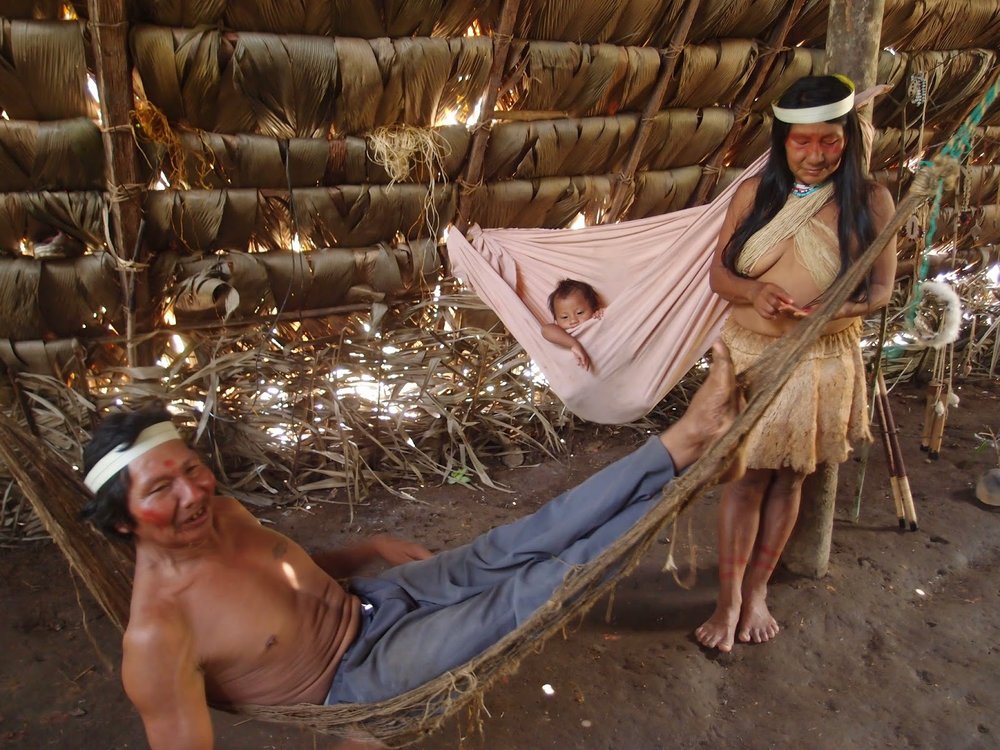
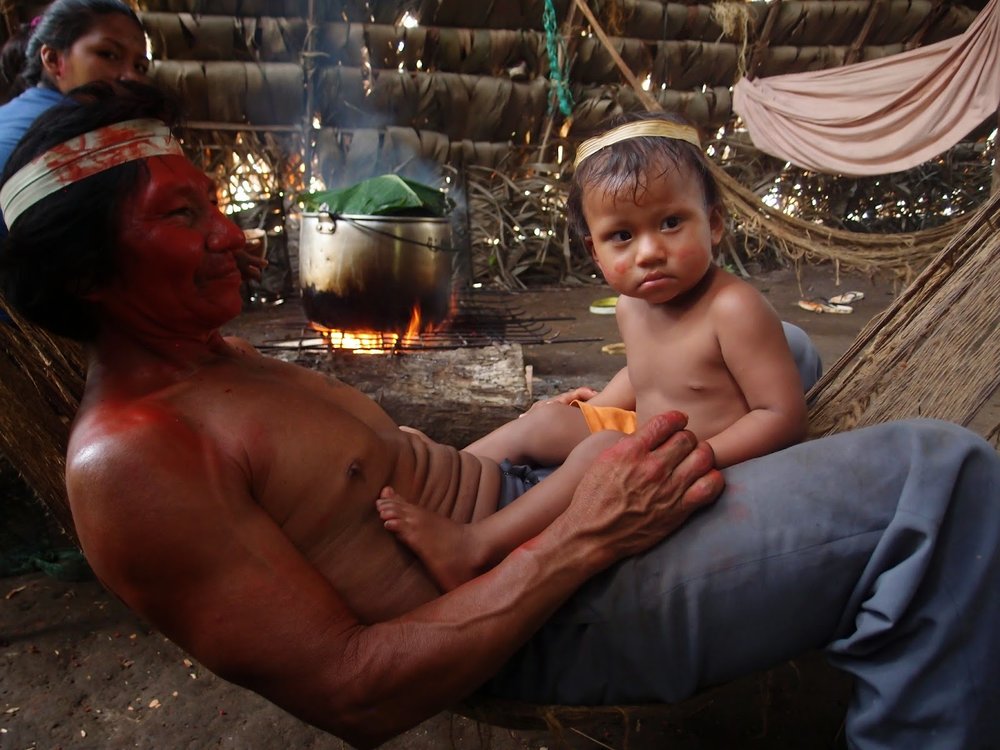
Inside are Bai in the hammock and Beba (his wife). (And doesn't that little one look cozy?)


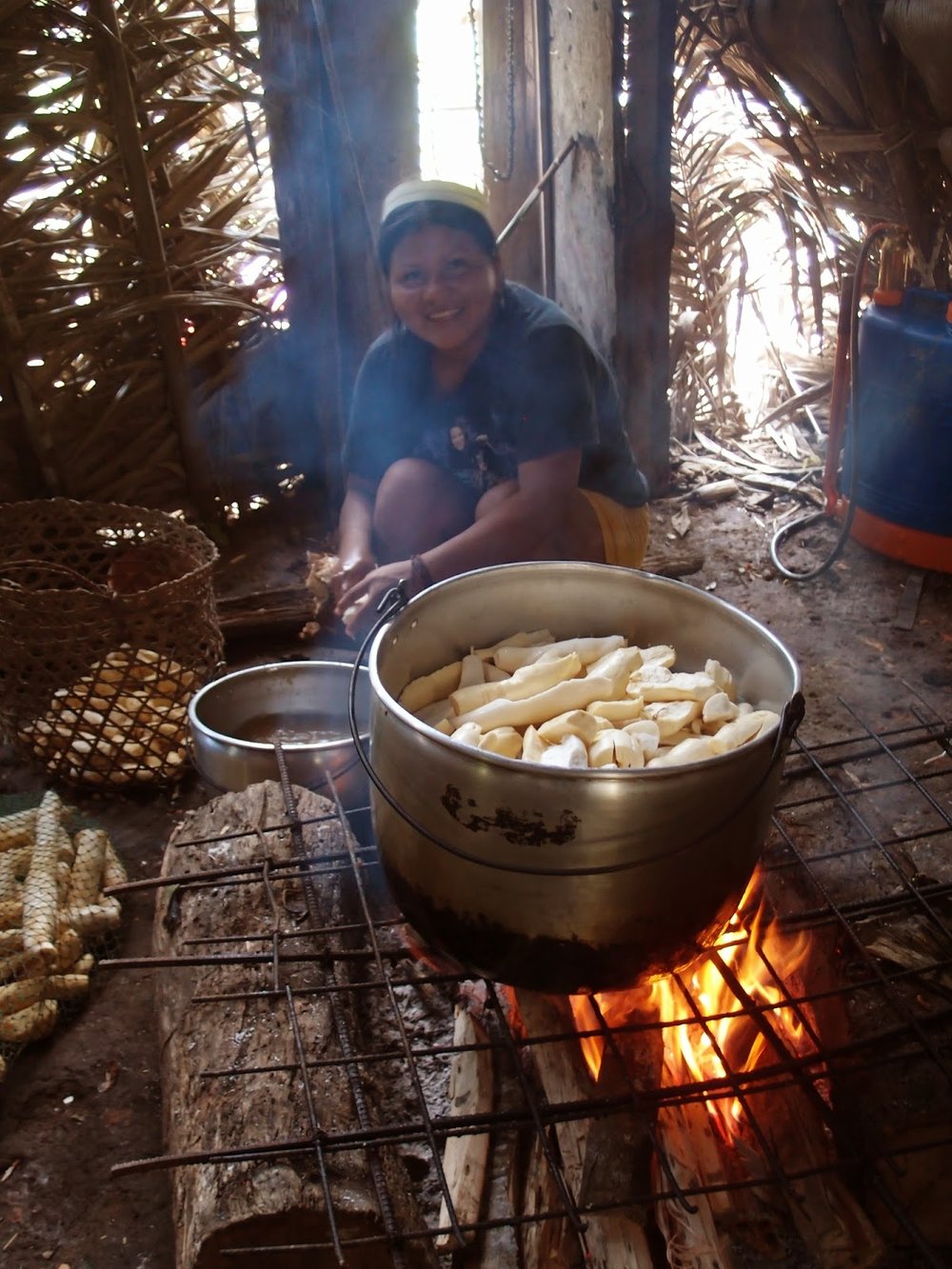
Peeling and boiling yuca, a step in the preparation of chicha, an important traditional drink.  Later, it will be mashed and chewed up to be fermented with saliva.


Cute groggy baby...


Beba was really kind-- she painted my face with achiote and gave me a palm corona to wear.  We had some interesting conversation later, despite the language barrier (I don't speak Waorani, and her Spanish is limited.)  She was the only person I met there wearing traditional clothing (hers are made from parts of palm trees.)  I spoke with Obe (another woman, in her twenties) about choice of clothing, and she said that she and other young women might wear their traditional clothes at home, but when they're interacting with tourists, they feel more comfortable wearing Western clothes... which is completely understandable.  The younger people (in their teens and twenties) are on Facebook (even though they can't access it often because of lack of Internet or cell service)... and I can see that they'd want control over their images online.


Here's Pegonka (my awesome guide), explaining how the poison from the liana is prepared for the blow dart guns.  Basically, as I understand it, the liana (a kind of vine) is ground up and wrapped in palm leaves.  Then water drips slowly into the top, and works its way down through the poisonous ground liana and absorbs some of the poison on the way.  Then the poisoned water drips into a container.  Then it's treated over the fire to create a kind of resin that Pegonka carries with him while hunting.


Everything in the house was very functional, except for these funny, random stuffed animals on a shelf...


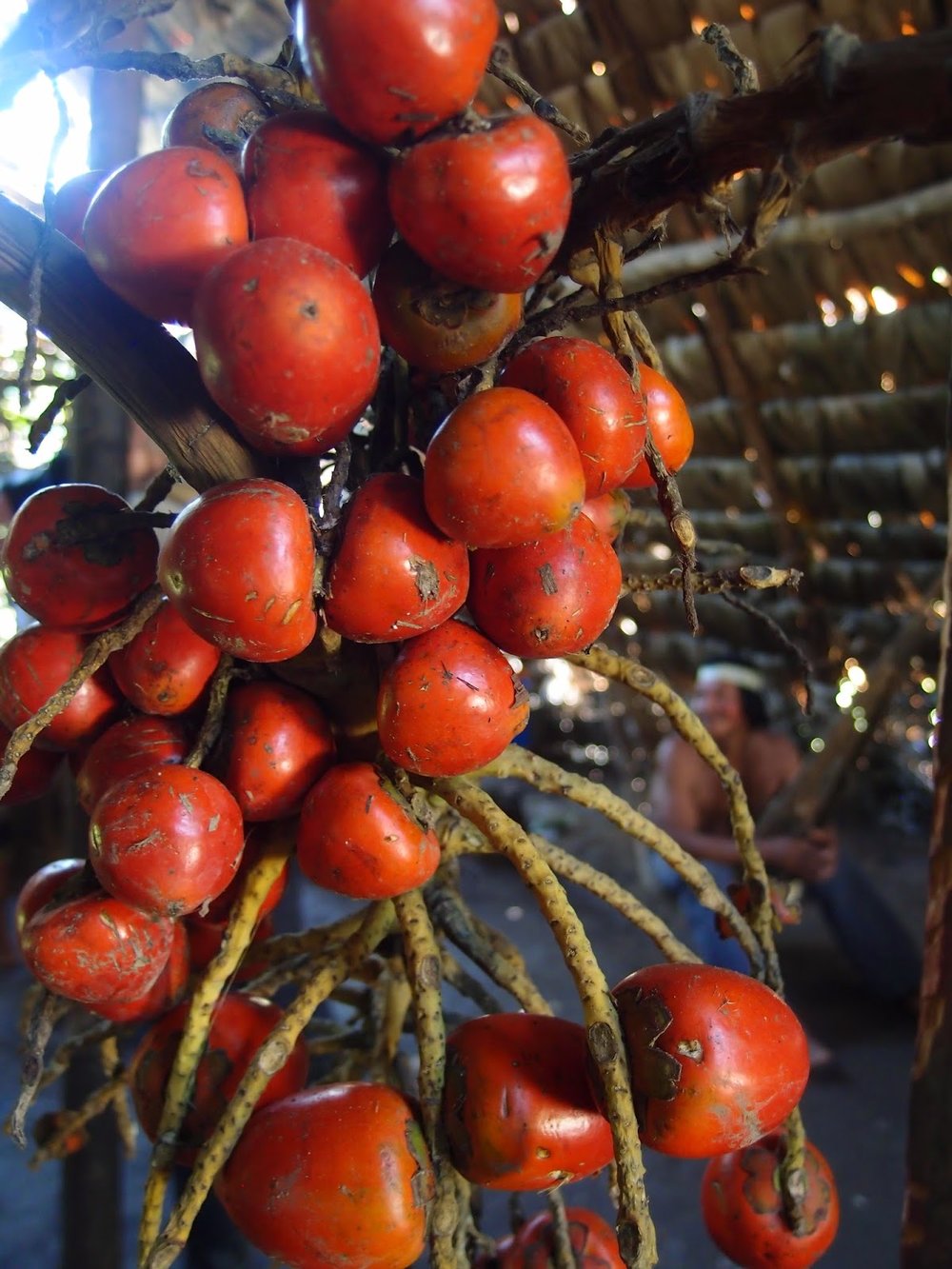
The face paint is achiote, which is a bright red edible seed, used in many dishes in Latin America.  For face paint, they took achiote seeds and rubbed them in their hands with a little water, then rubbed in on their skin.  They performed a traditional wedding dance, which is done at the annual Waorani celebration when many different Wao communities get together for celebration (I think it's around early March.)

Here are Pedro and Pegonka (with Bai in the background), doing the dance. (The women danced first, and had me join in.)


They were chanting, laughing, and having fun with it, circling around the house.  This is Bai in front, and Fausto and Luis.


So, while the guys are dancing, the unmarried women are sitting on this bench.  The guys were supposed to be scoping out the girls as they danced, and choosing who they wanted to marry.  Fausto's buddies kind of shoved him in my direction, and decided that he was choosing me.  (I'm happily married already, but due to the lack of young maidens in our tour group, he had to settle for me...)  Fausto was very shy about it, but yes, it appears that ritually at least, we're hitched...


The mood during and after the dancing was festive and fun...


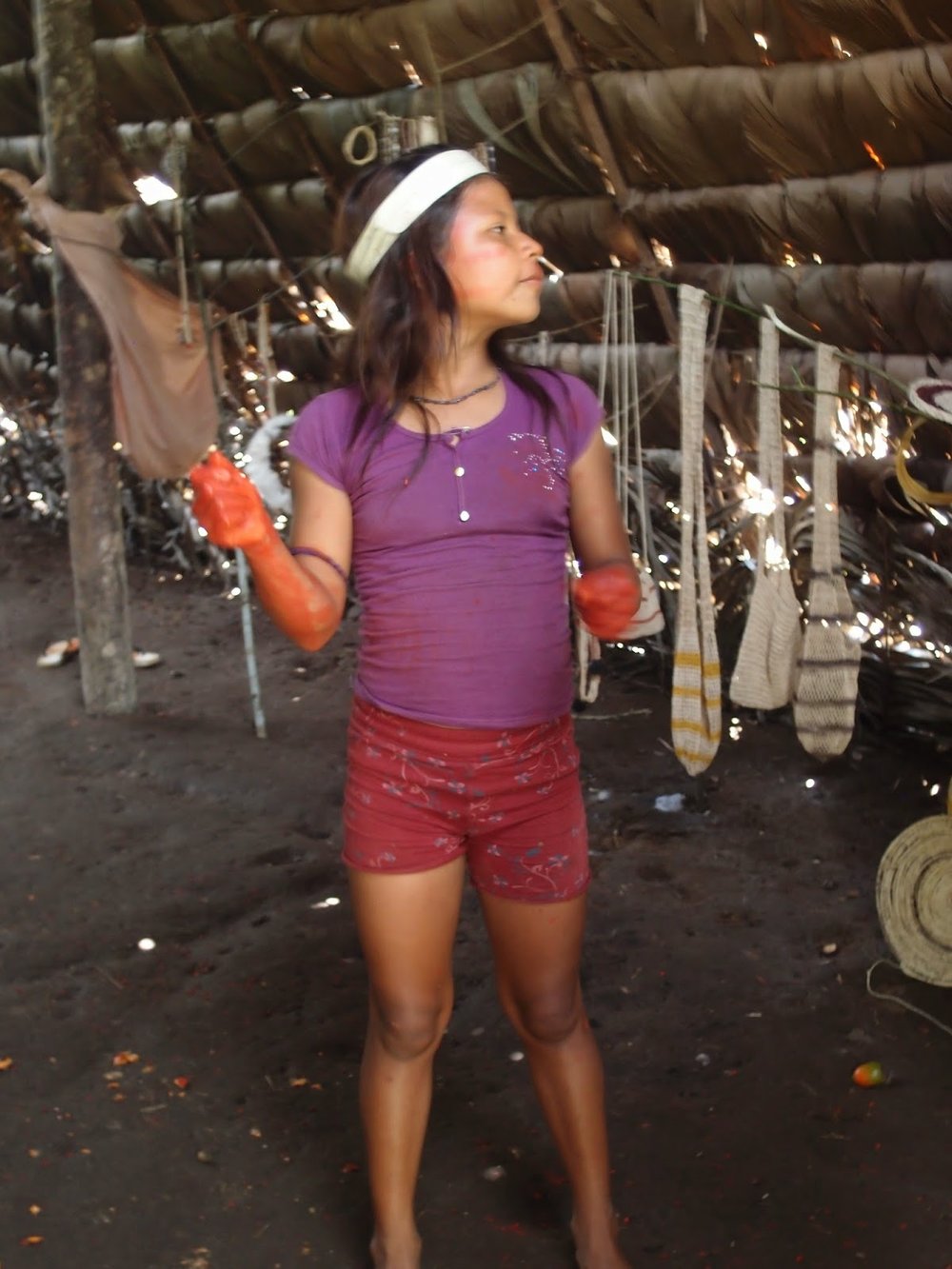
The young girls really got into spreading achiote over everyone...


Here's Obe-- a very smart, cool, determined woman, who has five kids, but is committed to graduating high school this year.  She has big dreams, and she has the highly motivated personality to make them come true. We spent lots of time talking in the canoe.... she's the one doing a fascinating ethnobotany project with Wao healers.  She suggested that I come back in a year or so and visit healers with her to learn about their techniques, an idea which I absolutely love.


I'm happy to say the digital recorder and camera I sent her actually arrived there in time for her to do the work she needs for her graduation in May. (I've had bad luck in the past with sending stuff to my friend Maria in Ecuador-- sometimes it gets there, sometimes not, sometimes months later-- so I felt really grateful my package got there on time!)

Since I have a background in writing ethnography and books, Obe and Pegonka and Luis were interested in my help in structuring and translating their own projects... another idea I love.  We've exchanged Facebook and email addresses, and I'm hoping that I can at least help from a distance, or maybe (hopefully!) even in person again. 


Hmmm... who should my next achiote victim be....?


Javier!  The English-speaking tour guide!


He was such a sport!  The girls attacked him with achiote and he had nowhere to run...  He's an all-around great guy (not Huaorani himself, but a supportive friend to them).  He's finishing his second degree in Quito now, and his research project is on sustainable tourism, focusing on the Huaorani Ecolodge.  He has a wonderful rapport with the local community-- you can tell they respect and appreciate each other.  I was really grateful to him for helping me coordinate getting the digital recorder and camera to Obe in time to complete her school project.... he worked with his awesome travel agency, Tropic, to facilitate getting my package to the community as fast as possible.


Okay, that's all for the moment!  If you haven't read my first two posts on my Amazon trip, you can read them here and here.  I have three more Ecuador posts that I'll share over the next few weeks, so come back soon....

xo,
Laura


THE AMAZON!!! -- Part 2, the Waorani Community

 
Bromelia, with her beautiful smile!

Hey guys,

In my last post about my Ecuadorian Amazon trip, I introduced you to my Waorani guide, Pegonka, and shared with you some jungle skills he taught me (and that I, in turn, passed along to my Lil Dude and Ian.  Blowgun target shooting in the snow was interesting...)

So in this post, I'll introduce you to other people in the Waorani community who I hung out with. 

 
The guy in the white shirt was our awesome English-speaking guide, Javier.

We spent lots of time in the dugout canoe-- the main form of transportation, since we were so deep in the jungle there were no roads, just extremely muddy foot paths.  And whenever we got into the canoe with our guide, a bunch of other people hopped in too, so we'd often have over a dozen people (including babies and kids) in the boat. It was a lovely, relaxed family atmosphere.


Our wonderful guide, Pegonka

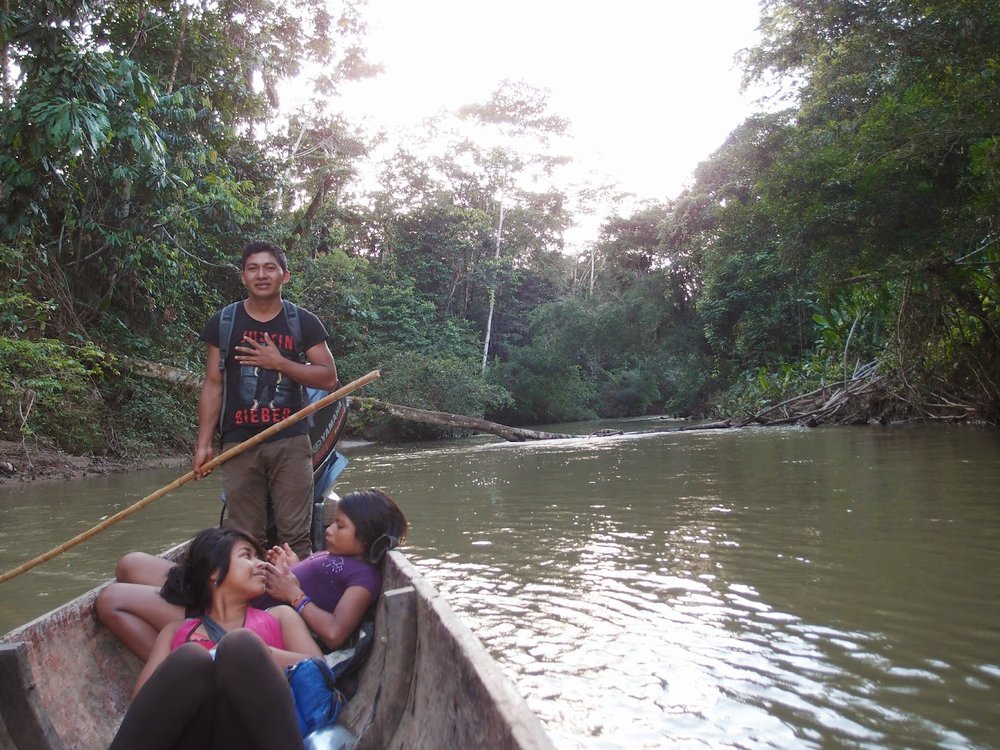
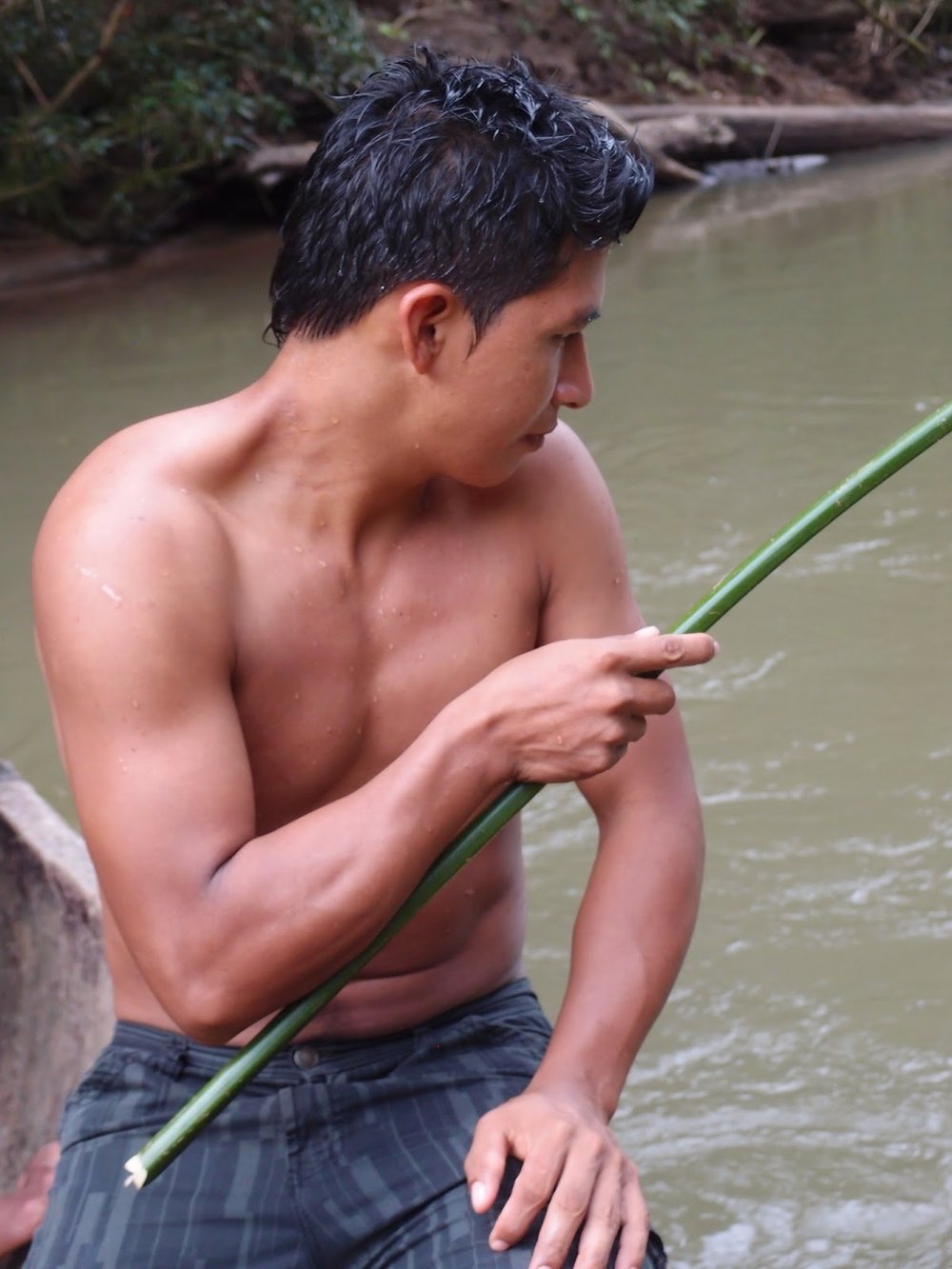
There's something so magical about floating down a river in the rain forest in a boat made by hand...  The guy in the picture below is Luis, and during my trip, he was in charge of "poling" with a bamboo pole at that back of the canoe.  The way the Huaorani Ecolodge is set up, people from the local indigenous community largely run it themselves (with logistical help from the Tropic-Eco tour agency).  They rotate roles at the ecolodge-- server, canoe poler, boat motorist (for when we're going upstream or doing pop-n-wheelies and need the motor), housekeeper, manager, guide, etc.


That's a Justin Beiber shirt Luis has on.... ;-)

We ate picnic lunches by the Shiripuno river, so idyllic.... Every morning, Pedro the excellent cook packed us up these huge, delicious meals in Tupperware and put them in a cooler for us to enjoy after hiking.


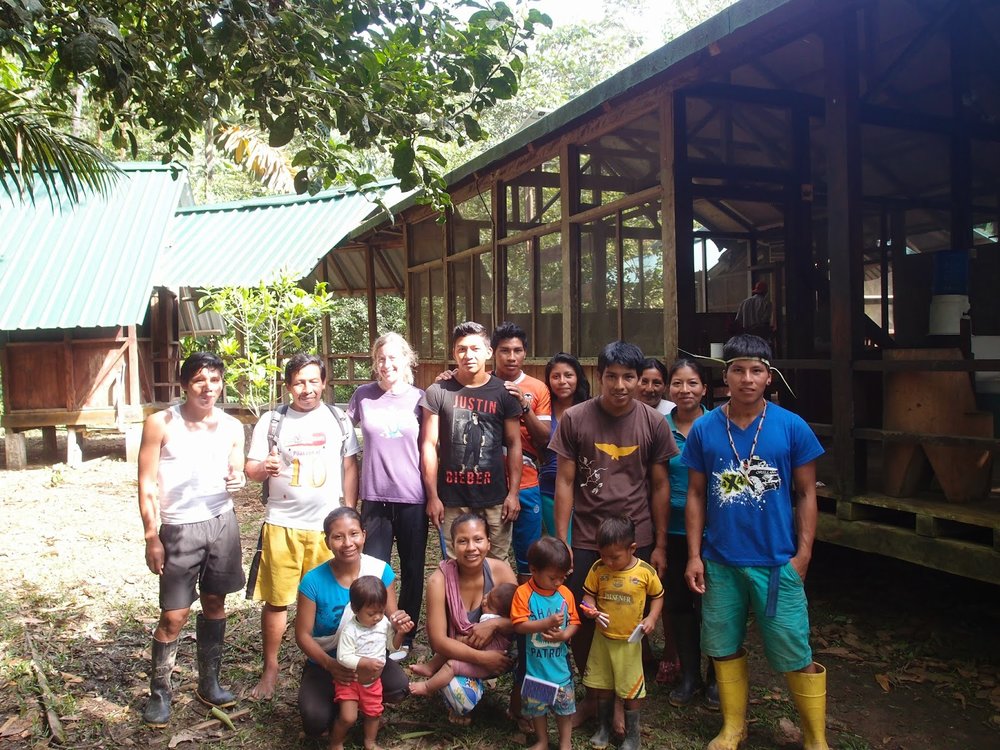
Here I am with the whole community that runs the Ecolodge-- all part of an extended family... I'll try to remember everyone's names (my apologies if I got any wrong!).  It's also tricky because everyone has a Waorani  name as well as a Spanish one.  Since I was unfamiliar with the Wao language, it was easier for me to remember the Spanish names.

From left to right, back row: Fausto, Gabriel, me, Luis, Pedro, Elizabeth, Remigio, Veronica, Beatriz (Obe), Pegonka

Front row: Laura and baby, Carmen and baby, toddler, and Fredy


Several of the teens and people in their twenties (including Luis and Pegonka) are going to high school now, and have culture-focused thesis projects they're working on.  I was really interested in hearing about their work-- it's incredibly valuable, especially since their culture has been changing so much over the past few decades.  After I got home, I mailed them a digital audio-recorder and camera to use in their field research. One night, Luis and I stayed up late and he told me some completely riveting family history about his grandparents, whose interactions with the missionaries and petroleros (oil company workers/owners) had far-reaching and drastic consequences. (I'll restrain myself from giving you more details now-- truly, that's a whole 'nother story!)

Luis

Beatriz is working on a project that sounds fascinating, and right up my alley-- talking with healers (curanderos and shamans) to document their healing practices and plant medicines.  I'm hoping to translate her project, and perhaps others, into English, once they're done.

Beatriz (Obe) and sweet toddler

adorable Bromelia

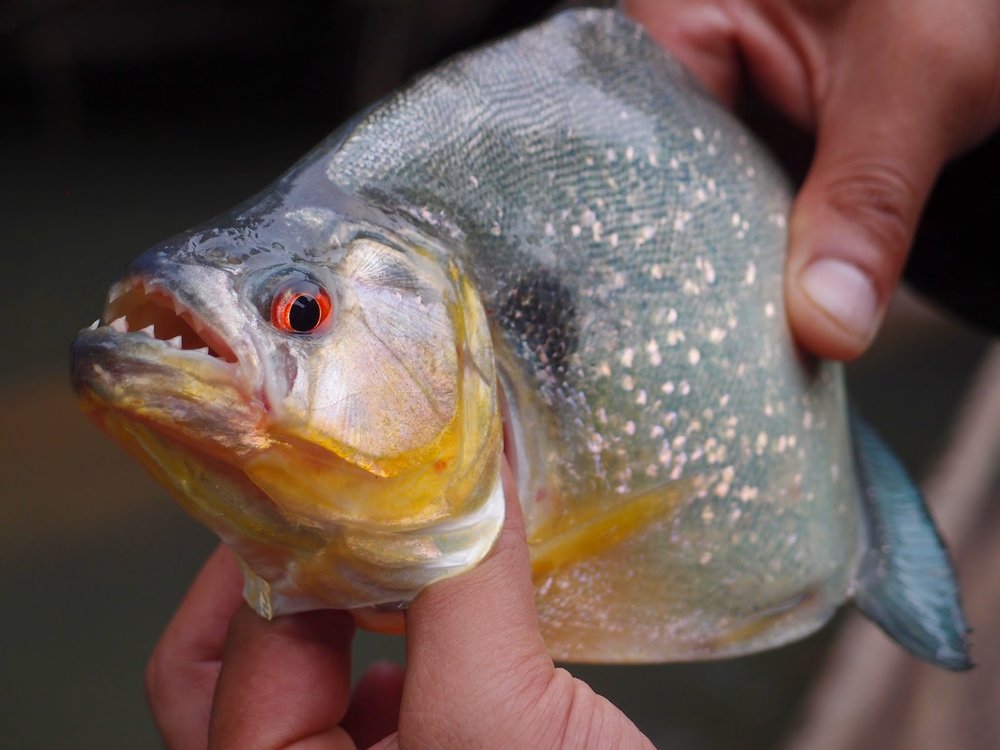
We went fishing with reed rods one afternoon, and Pegonka caught two piranhas!


We had them as part of our dinner, and they were delicious.  Apparently, this subspecies of piranha isn't too vicious toward people, which is good because everyone swims in this river, especially the kids.


Here, Luis has just dove into the water to look for the piranha that I hooked, but which then got tangled up in an underwater log when it tried to escape and hide.  Alas, he couldn't find it....


Laura and cute baby....


Here we are in the back area of the dining cabin, where everyone hung out. This is Carmen, and her baby, with irresistibly pinchable cheeks...


My buddy Fredy in the yellow shirt-- we had fun playing with paper airplanes and toy cars...


Gabriel and Pegonka, story-telling on the edge of the canoe... I love hearing myths and folklore.


Gabriel tried his special caiman-call at this lagoon, but no caimans appeared this time.  It was gorgeous, though...


Here I am with Beatriz (Obe) in the canoe... We had great conversation as we drifted down the river. She is busy with her five kids, but dedicated to finishing her high school degree-- this is her last semester!  It's challenging for the students here because there's no Internet or cell connection or library-- they have to find creative ways to do their school work.


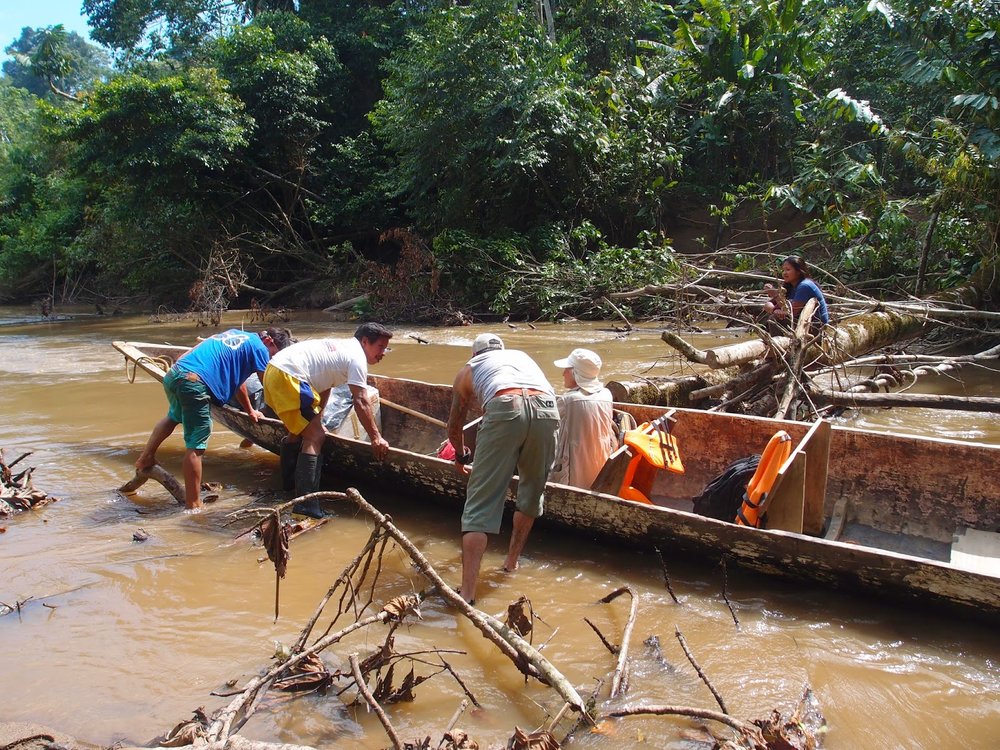
Sometimes, the canoe got stuck on debris in the river.  Here, the guys managed to wiggle it free, but still couldn't get it past the fallen trees.  So they pushed it back upstream a bit, and then revved the engine at full blast and let 'er rip...  The canoe did a pop-n-wheelie right over the logs.  (The rest of us were watching onshore, but our British companion stayed in the canoe-- it was tricky to get out in the middle of the river... she ended up getting an unexpected adrenalin rush. :-)


Except for those heart-pounding moments, it was sublimely peaceful traveling along the river, with bird songs and lapping water.


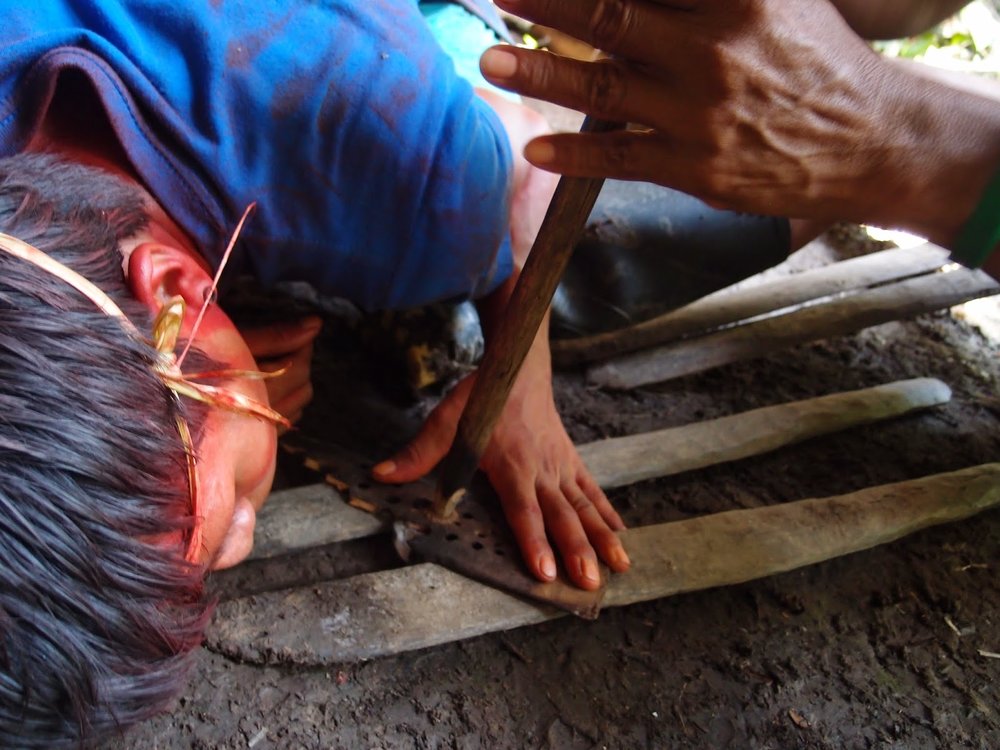
 Here's Pegonka with his father, whose traditional-style house we visited one afternoon.  They showed us how to start a fire with only wood and dried grass and cotton from the ceiba tree.


Here he is, spinning the stick, with its pointed end inside a hole, creating friction and heat. Pegonka is gently blowing, to give it oxygen.


And after a few minutes, tah-dah! A baby flame...


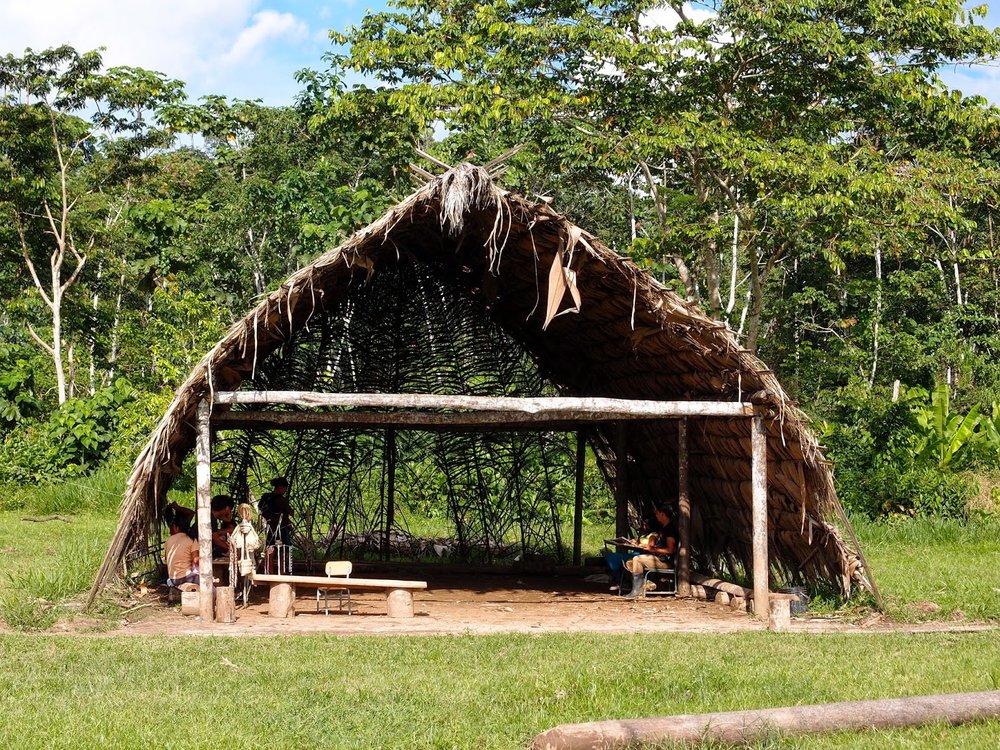
This is the meeting hall for the community, right next to the wooden school buildings.


Here is Veronica's house.  She's actually from another indigenous group, Quichua (which is also the indigenous group of my co-author, Maria Virginia Farinango.... only her culture is in the Andes mountains, and Veronica's is from this region of the rain forest. So, although their cultural groups share the same name, they have very different ways of life.)  She married Gabriel, who is Waorani.


Veronica will use this basket for collecting yuca, which she'll use to make chicha (a fermented drink made from boiled yuca which is mashed and chewed up-- the saliva helps ferment it.)  People usually have chicha on hand to offer guests and drink themselves.


Thanks for coming by!  I still have a few more Amazon posts for you.... a swim at a magical waterfall, a fun face-painting and dancing ritual.... and then, I'll do a post on the Otavalo market and Peguche waterfall with Maria Virginia in the Andes.

xo,
Laura