Finding the heart of a story...


Hey guys,

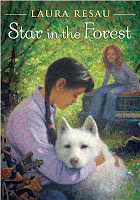
It's been exciting to have Star in the Forest as a Scholastic Book Fair selection this winter! It's also been on a bunch of state reading lists. (Thank you, readers in Kansas, Oklahoma, Washington DC, Arizona, Vermont, Indiana, and Virginia!)  I'm so happy that more readers are getting the chance to connect with the book.  I've been doing more and more author visits about this book... and I've been thinking about it a lot lately as I go over the Spanish version with my good friend and talented writer Gloria Garcia Diaz, who is translating it!  (Yes! It will exist in Spanish form-- we haven't found a Spanish-language publisher for it yet, but we'll get it out there one way or another!)

I wrote this essay for Book Page a few years ago, when the book first came out, but I thought I'd post it here so you can get a glimpse into my process of writing a book... which, for me, usually lasts years and years. Enjoy!


Behind the Book: Crossing borders to find the heart of a story
by Laura Resau

I came across the bones of my book Star in the Forest on the outskirts of a small town in southern Mexico. One day, fifteen years ago, I was taking my daily walk down a dirt road lined with shacks made of corrugated metal and plastic tarp and salvaged wood scraps. I strolled past smoldering piles of trash and leaped over trickles of raw sewage, giving wide berth to occasional packs of scrawny dogs.  

You should know that I loved these walks. Each one was an adventure. Curious kids would approach me, and soon their mothers and aunts and grandmothers would meander over and offer me a glass of warm Coke or a tortilla and beans. . . and new friendships were born.  

On this particular day, I came across a family leading a burro by a frayed rope. They smiled at me, and in perfect American English, one of the children said, “Hey, what are you doing all the way out here?”  

Surprised, I explained that I’d been working here as an English teacher, then asked where they’d learned to speak English so well. They chattered about their previous home in Chicago, where they’d spent most of their lives until their recent move back to rural Oaxaca. It felt surreal to be talking to such thoroughly American kids at the side of a dirt road where chickens pecked at corn kernels hidden among old diapers and Sabrita wrappers.  

Over my next two years living in Oaxaca, as I met more young people who’d spent part of their childhoods in the U.S., I tried to understand how they might feel straddling two very different cultures. I jotted down thoughts and observations in my notebook, thinking they might come out in a story someday.  

A few years later, in Colorado, I worked with an organization that assisted Mexican immigrant families with young children. I made home visits in trailer parks where many of the families lived, and there I met children on this side of the border who were also negotiating lives that bridged two worlds. I came to understand that despite the relative luxuries of their American homes—indoor plumbing and solid walls—undocumented kids have lives brimming with uncertainty. Considered “illegal,” they lack a home that gives them a sense of safety and belonging.  

During my time working with these families, I wrote a short story about a girl in a Colorado trailer park who misses her indigenous community in Mexico, and finds comfort in her friendship with a neighbor girl and a stray dog. My notes and ideas from my time in Oaxaca helped me flesh out the girl’s flashbacks. I kept tinkering with the story over the next few years, but, sensing that it was missing something, I always tucked it away again.  

While writing my first novel, I worked as an English teacher for immigrants. Then, after the book’s publication, my author visits took me to schools with large Latino populations. During these years, I formed friendships with many undocumented parents and children who shared with me their fears, anxieties and personal stories. A number of immigrants I knew had close relatives who had been deported from the U.S., leaving the rest of their family behind. Others had been assaulted or kidnapped while attempting to cross the border. Often, after hearing about these experiences, I took out my trailer park story and wove in more layers, ideas and details. Yet the manuscript always ended up back in a drawer.  

On trips back to visit southern Mexico, I sometimes visited the families of my new immigrant friends. I spent a week with a family in a Nahuatl village called Xono and bonded with my friend’s adorable three-year-old boy. On the morning of my departure, he looked at me with huge, earnest eyes and begged in his small voice, “Laurita, por favor, no te vayas a Colorado.” Please don’t go to Colorado. As I gave him a teary hug goodbye, I realized that to him, Colorado was a black hole that swallowed his loved ones. Back home, I pulled out my story again, incorporating experiences from Xono, adding bits and pieces from both sides of the border. Still, the story didn’t feel complete.  

And then one day, I heard from a 12-year-old reader I’ll call Maria. She connected strongly with Clara, the narrator of my first novel, What the Moon Saw, who visits her grandparents in their Mixtec village in Oaxaca one summer. Like Clara, Maria lived in the U.S. and had relatives in an indigenous community in southern Mexico.  

But unlike Clara, Maria was undocumented. She’d come to live in her Colorado trailer park as a young child, after crossing the desert illegally. Her father had recently been deported to Mexico, and soon after, Maria began having problems at home and at school. After a particularly bad argument with her mom, she yelled, “I want to go to Mexico, like Clara did!”  

Her mother pointed out that Clara was born in the U.S., and could cross the border freely. Yet if Maria crossed the border, it would be too dangerous and costly to return. “I don’t care!” she shouted.  

Then her mother told her that if she moved back to their village, she could no longer go to school; instead, she’d have to wash clothes by hand all day to earn her living.Understandably, this made Maria even angrier... and frustrated and sad.  

Which made me angry, frustrated and sad. So I wrote about it in my notebook. And suddenly, everything I’d been trying to say in the trailer park story crystallized. I wrote about a girl in Maria’s situation, trying to find a sense of power and comfort in a desperate situation beyond her control. The novel that emerged had the framework of my original story, but now I felt there was something more, something that made the story pulse and breathe. After a decade and many journeys back and forth across the border, its heart had arrived.  


Cool Creations from Readers!

Hey guys,

Thought I'd share with you some lovely things that readers have made, inspired by my books.  This is such a magical thing about writing stories-- something I didn't know about until my first book was published-- how the stories take on a life of their own, and add their spark to other people's creativity and on and on it goes...

Oona from Baltimore made me this gorgeous bracelet! The beads are the colors indigo, ruby and jade, one for each book in my Notebooks series. LOVE!  (And the jade bead is actual jade!)  


She made a beautiful pair of matching earrings, too (complete with Red Glass)!  (I could only find our cheap camera, so I can't do good close-ups here.) Aren't they pretty?


Here I am with Oona at the Baltimore Book Festival-- SUCH a treat to meet this super-creative girl in person!


 Here's a stunning Red Glass dish made for me by Judy Edwards, whose wonderful book club I visited last week! Here's what it looks like held up to a snowstorm, but it's even more stunning in bright sunlight.


A couple months ago, I visited a group of students at a local middle school who'd read The Queen of Water, and done some cool projects inspired by the book.


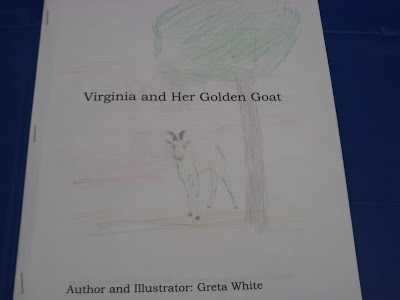
They each chose several projects from about twenty possible projects.  One of them was to write a picture book inspired by a character or theme in the novel (or something along those lines...)  Cheetah the goat was a popular character for this!


I got to hear the students read their books aloud-- lots of fun!


Here I am with Mrs. Baker, the mastermind behind the project possibilities, and a student's parent.

 
My Lil Dude is asking me to cuddle with him on the sofa, so I'll just give you a few bits of news and then hang out with him:
  • My book Star in the Forest is in the latest Scholastic Book Fair flyer! You can see it here.
  • You can watch a TV interview with me in Spanish here.  Three local middle school girls interviewed me!
  • I have three events coming up-- two in Fort Collins, and one in Chicago.  If you can come to any of these, I'd love to see you there!

    Sat, March 10, 10:00-1:00-- Laura Resau will do her workshop "Creating Vivid Worlds," hosted by Northern Colorado Writers. Fee and Registration required-- see here for details (and scroll down). 


    Sat, March 30, 2 pm-- Reading/Signing/Chatting with teen authors Laura Resau and Jeannie Mobley at Old Firehouse Books (232 Walnut St, Fort Collins). Free and open to everyone! 


    Saturday, April 6-- Chicago. Litworks: A Teen Lit Festival. 9:30 a.m. to 4:00 p.m. This begins at Eisenhower Public Library and moves to Ridgewood High School at noon. Other authors there will be Matt de la Pena, Alex Flinn, Mark Crilley, Jennifer Bradbury, and Brent Crawford. Details here. Free for teens, $5 for adults.


Thanks for swinging by!

xo,
Laura


Wise in Words: Shamans and writers and what we have in common


Hello, and a glorious new year to you!

As you might have noticed, I've been in a bit of a spiritual frame of mind lately, so I thought I'd post a piece I wrote several years ago for The Writing Bug blog. It's about what we writers can learn from shamans.

In three of my novels (Red Glass, What the Moon Saw, The Indigo Notebook), there is a shaman in the cast of characters.  Shamanism has fascinated me for many years, beginning with my first anthropology classes in college.  A few years later, I was honored to participate in rituals with several Latin American healers, and I became good friends with one in particular—Dona Epifania, a Mazatec shamaness. We first met about 15 years ago, while I was living in Oaxaca, Mexico and writing many stories (but had yet to get any published).  The more I spent time with Dona Epifania, the more parallels I saw between shamanism and story-telling… and the more I realized what a useful framework this was for my own creative process.

taking dried corn kernels off corn cobs with shamaness friend Dona Epifania

Mazatec shamans (and most shamans) heal, in part, by using words to create a narrative for their patients' problems (which usually have spiritual, physical, and emotional components).  By drawing on wisdom obtained in another realm to tell the story of what caused the patient to fall ill, the shaman empowers the patient to heal herself.  The famous Mazatec shamaness Maria Sabina often repeated in her trances, "I am a woman wise in words…", and indeed, her poetic chants were vital elements in her healing rituals.

 Maria Sabina

Like shamans, we writers wield power with words.  I know that as a reader, certain novels have helped me get through a rough time in my life.  In turn, readers have written to tell me that my books have helped them through their own difficulties.  Although I may be "wise in words" to the extent that I can use them to craft a story, any healing wisdom found in my books doesn't come from me.  I'm definitely no well of wisdom— most of us writers aren't.  We're measly, flawed humans just like everyone else.

Shamans believe that their power does not originate within themselves, but comes from a deeper, bigger source (in the case of Mazatec shamans, from God).  Writers have a wide range of ideas about where exactly their creativity originates, and I respect that.  It makes sense to find whatever works for you and go with it.  Elizabeth Gilbert of Eat, Pray, Love fame explores this subject beautifully and humorously in a videotaped talk).  Gilbert argues that it can be useful to your writing process to conceptualize your creativity as coming from an external source.  This perspective takes the pressure off you as a measly, flawed human.  It keeps you humble and grateful.  It makes negative feelings like jealousy or insecurity irrelevant, because you are part of a community of storytellers, all drawing from the same source.

In Oaxaca, one day I stumbled across an article in the journal Parabola about ancient Celtic storytellers called filidh, who were essentially both shamans and story-tellers.   They would enter the Otherworld through trance to receive their stories and divinations (sometimes by being wrapped in the pelt of a bull and placed behind a waterfall, and sometimes by lying in bed in the dark).  They often began stories with a nonsensical line like "Once there was, and once there was not...", which shows that the story does not come from a place of rationality, but one of mystery.  Have you noticed that the times you get completely in the flow of writing stories are the times when you've succeeded in shutting off your rational mind and entering an almost trance-like state?

with my Oaxacan curandera friend Maria Chiquita, on the right

A decade ago in Oaxaca, this shamanistic framework for story-telling gave me the courage and motivation to make my writing a priority despite the demands of everyday life, and despite my heaps of insecurities about whether my work was any good.  And now, seven published novels later, it's still the framework I return to when I encounter new struggles.  My current and ongoing challenge is how to balance the deep, creative aspects of a professional writing life with what I consider the more superficial, but necessary, aspects, like book promotion and contractual obligations and Internet-related demands.

I try to always remember the lessons I've learned from shamans-- that stories have the power to heal, that they come from a deep, mysterious source, that I need to let go of my rational mind to access them, and finally, that I must always stay humble and grateful.  One of my favorite quotes from Maria Sabina's chants is "I am a woman who looks into the insides of things…"  Ultimately, that's what writers do, too.  We look into the insides of things.  And we transform our visions into words.


Here are some writing prompts to help you do that (borrowed from ancient Celtic filidh.) 

Step 1:  Wrap yourself in the hide of a bull and find a giant waterfall.  Just kidding!   Seriously, though, try to shut off your rational mind and slip down into a deeper place for a little while.

Step 2: Without thinking too hard or censoring yourself, write a wee stream-of-consciousness story/poem beginning with one of these prompts.  (Pick whichever one speaks to you).

"Once it was where it was not beyond seven times seven countries and the Sea of Operencia behind an old stove in a crack in the wall in the skirt of an old hag and there in the seven times seventh fold...a white flea; and in the middle of it the beautiful city of a king" ; and in that city…

"Once there was, and once there was not..."

"Once long ago, and a long time it was. If I were there then, I should not be there now. If I were there now and at that time, I should have a new story or an old story, or I should have no story at all..."

Step 3:  After you've got a rough draft, *give thanks* (shamans always do.)  Then you can go back and revise, letting your rational mind come into the picture…

Thanks for reading!  Have courage on your writing journey!

xo,
Laura
* Source:

Maria Sabina: Her Life and Chants, by Alvaro Estrada,  Ross-Erikson Inc., Santa Barbara, 1981.

Alive!

 
mystical view of my back yard on Christmas morning

"Success is feeling alive."

So says my creator friend, Les Sunde, the wonder-filled spirit behind what my Lil Dude calls "The Magic Place," but which is officially called Swampgas and Gossamer: Lost and Found Emporium (which I wrote a post about here.)

Last year my new year's  intention was to let myself be happy. That was at the tail end of nine months of packing and unpacking and packing and unpacking and packing and unpacking as our dear little house was undergoing a gigantic renovation and we were renting temporary places to live. It was also at the last stretch of the third and final book of the Notebooks series, and a few years in which I'd had two books a year published.  Although good things came of it all (books! roomier new-old house!), it was pretty darn stressful, with so many deadlines and so much renovation-related work.  So last year, I let myself enjoy it all... delving into my next book at a leisurely pace, decorating our new-old house, cooking new concoctions, reading books for pleasure...

This year, my intention is to feel ALIVE.  By that, I mean being grateful and conscious of my existence in this one wild and precious life (to quote a phrase by poetess Mary Oliver.)

Back to Les and his ideas about being alive and creating things.  His fantastical creations make my heart fly, my soul tingle, my skin quiver with goosebumps.  "What moves the goosebumps?" Les asks. I think about this, because that goosebump-inducing, soul-tingling feeling is what I want my readers to experience. And to make that happen, I need to connect with the source-- the power that moves the goosebumps-- and let it flow through me. At the heart of it, the whole book experience is about feeling alive.  Writing a book makes me feel alive, and I hope that reading it makes my readers feel more alive.

I've been thinking about Les's wisdom a lot lately because I'm writing a profile about him, his creations, and his philosophy for Fort Collins Magazine. This is a delicious thing about having finished the tight deadlines of a book series-- I have time to explore and write shorter pieces during mini-breaks from my new novel-in-progress. It feels so luxurious to do these things, to follow my soul's whims after years of feeling deadline pressure.

I can't wait to share my article about Les with you-- he's so inspiring and unique-- an important part of my creative life. The article will be out this spring, and I'll try to link to it, or cut and paste it, or something!

May you feel ALIVE this new year! Hugs and happy wishes!

xo,
Laura

On Happiness

Vintage gnome-elves that Frances passed along to us-- they make us so happy! :-)


My spirited and wise next door neighbor Frances Maciel passed away a couple weeks ago. Ian and Lil Dude and I adored her.  She was like an abuelita—a grandmother—to Lil Dude.  She called him her ‘jito (little son) – they would sit together on the comfy astroturf porch of her flamingo-pink-trimmed house and munch on nuts together, chatting and laughing.  She made us many tamales over the years, and regaled us with funny stories about her life here in our ‘hood, sometimes in English, sometimes in Spanish.


Lil Dude and I visited her at the rest home the day before she had the massive stroke that led to her death a few days later. That day, she held my hand tightly in her hand, gnarled with arthritis.  With shiny eyes, she looked at me intently, and said, “Life is beautiful. Be happy.  Don’t waste life being angry.”  She repeated those words, over and over. “Life is beautiful.  Be happy.”  I squeezed her hand and looked into her eyes and promised to take her advice.

#

This morning, Lil Dude woke up in a grumpy mood. At breakfast, he moaned, “Why is everyone being mean to me?”

Ian and I had to suppress our smiles, because just yesterday Lil Dude woke up in a joyful mood and kept exclaiming, “Wow! Why is everyone being so nice to me?!”

This morning, I tried to explain to him (in five-year-old boy language) that this was all about his perception.  He felt grumpy, so it seemed that the world was being mean today… but actually, Daddy and I were treating him just the same as yesterday morning. The difference was his mood, his perception.

I thought of Frances’ words.  I told Lil Dude that happiness is a choice. We can choose to be happy.  And one magic trick to becoming happy is to make a list of things that make you happy, things you’re thankful for.  So we made a list: “The snow is awesome.  I get to wear my snow pants and boots today.  Our house is cozy with our Christmas tree. I had yummy waffles for breakfast…”

And it worked.  He smiled.  He changed his mood to happy and the world became nice to him again.


For most of us, choosing happiness is a skill we must develop and practice, so why not start young rather than waiting till your deathbed?   A pallative nurse, Bronnie Ware, recorded the epiphanies of her dying patients in her blog Inspiration and Chai. She found that one of the top five regrets of dying people is:  I wish that I had let myself be happier.

Bonnie writes, “Many did not realise until the end that happiness is a choice… Life is a choice. It is YOUR life. Choose consciously, choose wisely, choose honestly. Choose happiness.”

I promise myself to take Frances’ advice to be happy, to remember that life is beautiful.  I will honor this, and I will continue to teach her ‘jito to choose happiness, too.  

And, dear reader, may you choose happiness in your own beautiful life as well…

Rest in beauty and happiness, querida vecina Frances.

xo,
Laura


Taking Action NOW!

Like all of you, I've felt overwhelmed with sadness and horror and anger about the shootings in Connecticut. To my readers who've been affected by the tragedy, my heart goes out to you. I am so sorry that you and your loved ones have suffered. 

In my last post, I answered a reader's question about The Queen of WaterWhen you listen to [Maria Virginia's] stories and or those of similar background and history, do you ever feel guilty about our often over-privileged lives and how do you face/deal with that?

My answer was basically that I transform that guilt (or any other overwhelming emotion) into action. And this is also my response to the shooting tragedy. I'm transforming my sadness, horror, and anger into action. 

For me, taking action often means writing books-- like The Queen of Water (indigenous issues) and Star in the Forest (immigration issues). Sometimes it means letters to my representatives or letters to the editor.  

In the case of the increasing assault weapon violence in our country, I believe that an essential part of the solution is to strengthen gun control.  Maybe you agree with me, or maybe you think the main approach should be to give free access to mental health care and restrict mentally ill people from obtaining weapons (which I agree is also important). 

Whatever your response is, I hope that you're doing something about it now rather than just feeling awful and talking about how awful you feel.

I've signed White House petitions about gun control and written emails to my congress people (on the state and national level, along with the governor and the president.) I've also written a letter to my city's newspaper.  Here's the jist of my letters:


It’s not enough to feel saddened and horrified by the shooting in Connecticut. It’s not enough to offer prayers and hugs and tears.  We need to take responsibility for the gun laws in our country.  With reasonable federal  laws, we could have prevented this violence.   Every single one of us who has a child or loves a child should feel compelled to take immediate action to ban or restrict access to weapons for mass killing. According to a CNN/ORC poll in the Washington Post in August 2012, most Americans support a ban on semi-automatic weapons and high-capacity clips. Every single person who supports these bans should be writing to their congress people, signing petitions, and making it clear that we will no longer allow the politically powerful NRA lobby to endanger our children’s lives. Let’s not just talk about how saddened and horrified we are.  Let’s take action now.

No matter what your age, you can easily find contact info for your state and national representatives online and write to them. If you don't know who they are, you can find out here. I also urge you to write to your governor and the president, who you can contact here.  You can sign a White House petition for better gun control here.

Remember, your letter can be simple and short.  It will only take you about twenty minutes to take this immediate action. And you will feel better when you do.

Thank you, dear readers, for your big hearts and social conscience.

xo,
Laura